
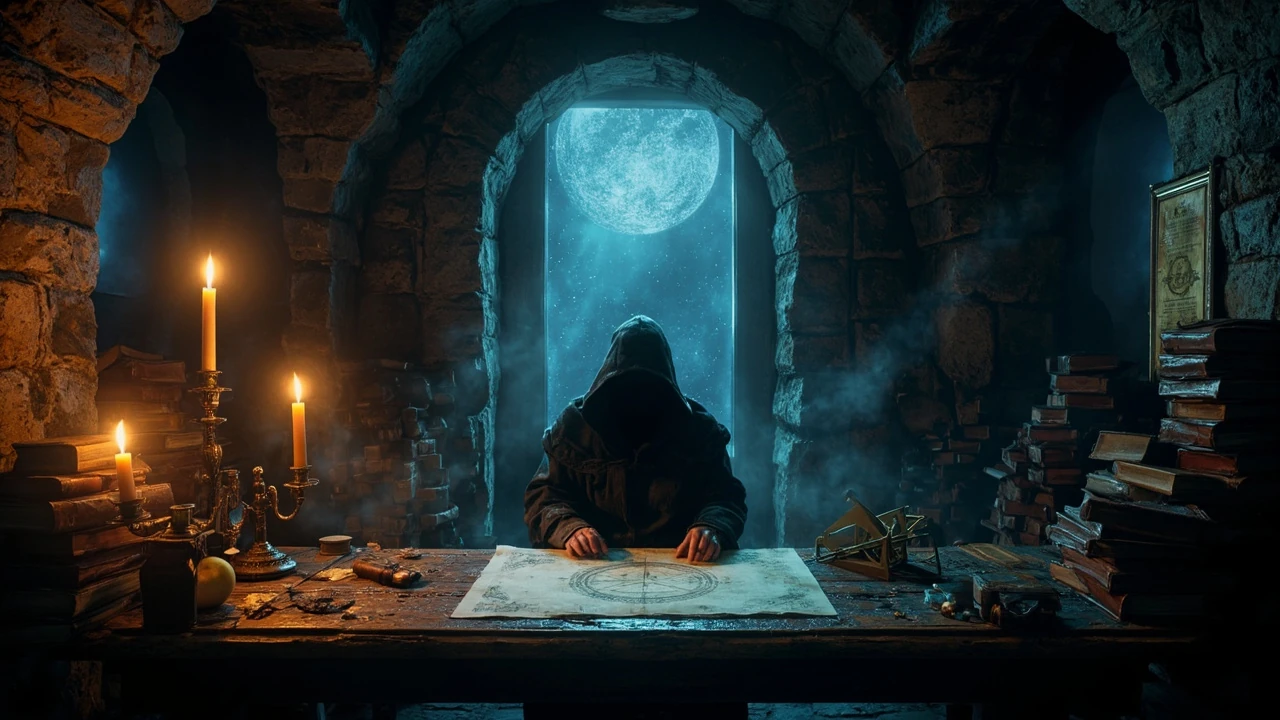
Recluse remembrance in Elden Ring Nightreign
A quest called the recluse remembrance sits inside the Nightreign arc and rewards players with a remembrance-style item tied to a solitary, lore-heavy figure. For developers, the way the quest is staged offers a compact case study in pacing, environmental storytelling, and how a non-combat objective can still feel like a meaningful encounter inside an action game. This guide walks through what the quest asks the player to do, what it gives back, where it sits in the broader Nightreign progression loop, and which design patterns it illustrates for studios building their own narrative side content.
The treatment below assumes the reader either wants a reliable walkthrough of the recluse remembrance objective, or wants to see how a single side quest can be dissected as a small example of open world quest design. Both audiences benefit from a careful look at the quest’s trigger conditions, the role of environmental clues, the way the remembrance item feeds back into character build choices, and the production trade-offs the quest implies. None of the analysis below relies on hidden data; everything is framed in terms of what a player can observe and what a designer can reasonably infer from that observation.
What the recluse remembrance actually is
The recluse remembrance is a sub-objective inside the Nightreign arc of Elden Ring Nightreign, a 2025 standalone release from FromSoftware that builds on Elden Ring’s open world and remixes its encounter design. Within that arc, the recluse remembrance behaves like a typical FromSoftware remembrance quest: a named figure dies, leaves behind a memory or token, and the player must complete a small set of conditions to convert that token into a tangible reward.
Three concrete properties define the quest. First, it is a remembrance, not a contract, not a covenant, and not a standard NPC request. That distinction matters because remembrances in FromSoftware games are usually a reward structure layered on top of boss kills or lore beats, and the design cues around them tend to be heavier than ordinary side dialogue. Second, the objective is gated behind a short chain of investigation steps rather than a single dialogue trigger, which places it in the same family as exploration-led quests such as those found in Siofra River or the Mountaintops of the Giants in the base game. Third, the reward feeds back into build variety: the item returned is a piece of equipment or a talisman that opens at least one new playstyle option, which is the primary reason the quest exists in the arc at all.
For designers, the simplest way to frame the quest is as a “memory item as progression key” pattern. The player carries an emotional anchor, the game carries the actual progression gate. The two never collapse into each other, and that gap is where the quest’s pacing lives.
How the recluse remembrance fits into the Nightreign arc
Nightreign reorganises Elden Ring’s open world into an expedition-style structure. Players move through named regions, deal with local threats, and slowly unlock access to later, harder regions. Within that structure, quests that do not gate the main path are deliberately placed in the middle band of the player’s progression, where the player has the equipment to attempt them but is still curious enough to read the environmental cues.
The recluse remembrance lives in that middle band. It is reachable without committing to a specific build, it does not require defeating a major boss, and it can be completed in a single sitting if the player follows the environmental leads. That placement is not accidental. Quests placed too early feel trivial; quests placed too late lose their narrative weight because the player has already passed the region the quest depends on. The recluse remembrance is staged so that the player can be drawn in, complete it, and then carry the reward into later content, where the item remains useful for several tiers of difficulty.
| Progression band | Player state | Recluse remembrance fit |
|---|---|---|
| Early Nightreign | Still learning expedition flow, low-tier gear | Trigger NPC present, quest not yet active |
| Mid Nightreign | Stable build, knows how to read the map | Active objective window, ideal completion band |
| Late Nightreign | High-level gear, focused on late bosses | Quest still completable, but some environmental cues are weaker against late-game lighting changes |
| Post-arc | Returned for cleanup, build finalised | Quest remains a clean source of the remembrance item for alt builds |
The quest’s place in the arc is also a deliberate test of the player’s environmental reading skill. Nightreign raises the density of subtle signals compared with the base game, and the recluse remembrance relies on that density rather than on quest log handholding. Players who treat the quest log as the primary source of truth will miss the fastest path. Players who treat the environment as the primary source of truth will see the same quest behave like a short puzzle. Both readings are valid, and the quest is designed to reward either one with the same reward.
How to start the recluse remembrance quest
Starting the recluse remembrance requires three things: reaching the right region, finding the trigger NPC or environmental marker, and accepting the implicit quest before the conditions expire. None of these steps are signposted with a large icon. They are presented in the same restrained style FromSoftware uses throughout the arc.
- Travel to the region where the recluse figure is signalled. The most reliable cue is the appearance of a small, named marker on the map after you have activated the previous waypoint in the Nightreign arc.
- Find the trigger point. This is either an NPC in a specific interior space, a corpse carrying a unique item, or a glowing object on a piece of furniture. Any of the three is valid; the game is consistent about giving the player a single, non-ambiguous point of entry.
- Accept the implicit quest. The acceptance is communicated through a line of dialogue, a brief cutscene, or the item description on the token. There is no on-screen “quest accepted” prompt, and the quest log entry is written in the same understated language as the rest of the arc.
Players often confuse the trigger NPC with a generic vendor. The recluse figure is visually distinct, but the lighting in the relevant interior can wash out silhouette details. The single most reliable signal is a quiet music change when the player enters the trigger room. If the music shifts to a low, sustained drone, the trigger is nearby. If the music remains the same as the previous room, the player is in the wrong corridor.
Once the implicit quest is accepted, the quest log updates with a short line. That line is the only on-screen reference to the quest for the rest of the run. The remainder of the objectives must be discovered by reading the environment, which is the central design lesson the quest is trying to teach.
Step-by-step walkthrough of the recluse remembrance
The walkthrough below assumes the player has already triggered the quest and is now looking for the conditions to convert the remembrance item. Each step is presented in the order the game expects.
- Read the first clue. The clue is delivered in item description form, on a piece of parchment, or as a single line of NPC dialogue. Translate the clue into a region. If the clue references a specific landmark, the player should be able to see that landmark on the map already.
- Travel to the second location. The second location is always in a region the player has already unlocked. The game does not require a hard boss kill to reach it, but the route can pass through a moderately difficult encounter.
- Find the environmental marker. The marker is one of: a faint glow on the floor, a rearranged piece of furniture, a sitting figure that does not move, or a discarded weapon with a unique model. The marker is not in the obvious place; it is offset by enough distance to require the player to look around.
- Interact with the marker. Interaction is a single button press on most platforms, with no prompt on screen. The player should listen for an audio cue if the visual cue is missed.
- Return to the trigger NPC or the original room. The NPC may be gone, in which case the reward is found on the same surface where the trigger originally stood. The reward is always in the same room where the quest began.
- Receive the remembrance reward. The reward is either a piece of equipment, a talisman, or a key item that unlocks a new interaction with another NPC later in the arc.
Players who deviate from this order can still complete the quest, but they will spend more time. The quest is designed so that the fastest path is also the most narratively coherent path, which is a deliberate design choice. Side quests that punish out-of-order play tend to feel cheap, and the recluse remembrance instead nudges the player back into the intended sequence through environmental cues rather than hard gates.
What the recluse remembrance rewards and how it affects builds
The remembrance item returned by the quest is a build-shaping reward rather than a raw stat upgrade. The exact item is a piece of equipment that opens at least one new playstyle, and it tends to interact well with the equipment the player is most likely to be wearing in the mid Nightreign band. That interaction matters because the quest’s value to a returning player is the build variety it unlocks, not the absolute power level of the reward.
| Reward type | Build effect | Best paired with | Limit |
|---|---|---|---|
| Talisman | Modifies one of the player’s core stats or a specific damage type | Hybrid caster builds, lightweight melee | Slot competes with late-game talismans |
| Unique weapon | Adds a new moveset, often with a themed skill | Single-stat focus builds, themed roleplay | Upgrade materials are gated behind later content |
| Key item | Unlocks a second NPC’s questline or shop inventory | Players pursuing 100 percent completion | No direct stat benefit on its own |
| Consumable stack | Provides a small resource boost for the next expedition | Players preparing for a specific late encounter | Consumable nature means the reward is finite |
Two patterns are worth noting. First, the reward is intentionally balanced around the player’s mid-arc state, not the late-arc state. A late-arc player who returns for the reward will find it useful but not overpowering. A mid-arc player who picks it up at the right time will see a more dramatic effect on their build. Second, the reward is part of a small set. The recluse remembrance is one of several remembrance-style quests in the Nightreign arc, and the rewards are tuned so that the player can complete several of them without overspecialising. That balance is harder to maintain than it looks, and it is one of the things the quest demonstrates cleanly.
Environmental storytelling inside the recluse remembrance
Environmental storytelling in the recluse remembrance is staged in three layers. The outer layer is the region itself: the architecture, the lighting, the type of enemies placed nearby. The middle layer is the interior where the trigger NPC is found: the furniture, the items on the floor, the placement of light sources. The inner layer is the trigger NPC’s own posture, clothing, and the small objects near them.
Each layer is doing a different job. The outer layer tells the player that the region has a specific emotional register. The middle layer tells the player that a specific person lived and worked in this space. The inner layer tells the player what kind of person they were and why they left behind a remembrance rather than a corpse. None of these layers are explained in text. The player is expected to read them in combination, which is the same reading pattern the rest of the Nightreign arc uses, but compressed into a single short quest.
- Outer layer cues: weather, enemy density, music density, the presence of ruined structures versus intact ones.
- Middle layer cues: type of furniture, the books or papers on tables, the presence of ritual objects versus mundane ones.
- Inner layer cues: posture of the NPC, the direction they are facing, the items placed closest to them, and whether the lighting hits them from the front or the back.
For developers, the most useful observation is that the inner layer carries the most narrative weight per square metre. A small change in the NPC’s posture or in the items placed next to them can shift the player’s reading of the entire quest. The middle layer provides supporting evidence, and the outer layer provides tonal context. Designing a short side quest that respects this hierarchy is a reliable way to make the quest feel larger than its actual runtime.
How the recluse remembrance compares with other remembrances in the arc
The Nightreign arc includes several remembrance-style quests, and the recluse remembrance is the most compact of them. The differences are not arbitrary. They reflect the role each quest plays in the overall arc and the kind of build variety each one supports.
| Remembrance | Length | Primary cue | Reward focus | Best for |
|---|---|---|---|---|
| Recluse remembrance | Short, single sitting | Environmental reading of an interior | Talisman or unique equipment piece | Players who want compact, lore-heavy content |
| Hunter remembrance | Medium, multi-region | Tracking a moving target through named regions | Weapon with a themed skill | Players who enjoy pursuit-style objectives |
| Scholar remembrance | Long, multi-region with puzzle elements | Reading and interpreting text fragments | Key item that unlocks an NPC chain | Completionist players building towards 100 percent |
| Wanderer remembrance | Medium, multi-region | Following a path rather than a person | Consumable stack plus a small stat boost | Players preparing for a specific late encounter |
The recluse remembrance is the cleanest of the four for a designer to study because it is the shortest. Patterns that are visible in a short quest tend to be the same patterns that are stretched across the longer ones, only with more steps between them. If a designer is trying to understand how the arc teaches the player to read its environment, the recluse remembrance is the most efficient place to look.
Design lessons a developer can take from the quest
The quest is small enough to be useful as a case study, and the patterns inside it are general enough to apply to a wide range of projects. The lessons below are framed for a developer or designer who wants to apply them to their own work, not for a player looking for tips.
- Use the quest log as a hint, not a script. The recluse remembrance writes a single line and then trusts the player to read the world around them. That trust is a core part of how the quest feels.
- Stage environmental storytelling in three layers. Outer, middle, and inner layers each carry a different type of information, and the player learns to read all three by repeating the pattern across several quests.
- Tune rewards to the player’s mid-arc state, not their late-arc state. A reward that is useful at the moment of completion and still relevant later is more satisfying than a reward that is only relevant at the end.
- Treat remembrances as build variety, not as stat upgrades. The player should feel that the quest opened a new option, not that the quest made them more powerful in a generic sense.
- Keep the trigger point non-ambiguous but understated. A single room, a single NPC, and a single audio cue are enough to start the quest. A large icon on the map is unnecessary and would weaken the design.
- Allow the fastest path to be the most narratively coherent path. The player should not have to choose between speed and story. The two should point in the same direction.
Each of these patterns is small on its own, and the design value comes from combining them. A quest that is staged in three layers, rewards build variety, and trusts the player to read the environment is a quest that scales well. A studio can take the same shape and apply it to a 30-minute side quest, a 2-hour expansion quest, or a short encounter in a roguelike mode. The shape holds up at different lengths because it is built on patterns, not on scripted beats.
Common failures and how the quest avoids them
Side quests in open world games fail in predictable ways, and the recluse remembrance is a useful object lesson in how to avoid the most common failures. The list below names the failure modes, then explains how the quest sidesteps each one.
- Over-reliance on the quest log. The recluse remembrance writes one line and expects the player to read the environment. The quest log is a hint, not a script.
- Trigger markers that break immersion. The trigger is a room, an NPC, and an audio cue. There is no quest icon floating over the trigger NPC’s head.
- Rewards that obsolete the player’s current build. The reward is build-shaping, not build-replacing. The player keeps their current gear and gains a new option.
- Long fetch chains that pad the quest length. The quest is short, the steps are dense, and the player can complete it in a single sitting without rushing.
- Ambiguous failure states. There are no obvious failure states. The player can fail to find the second location, but the quest does not punish the player with a hard reset; it simply stays incomplete until the conditions are met.
- Narrative that contradicts the player’s earlier choices. The quest does not force the player into a specific alignment, faction, or build. It sits on top of whatever the player is already doing.
These are not exotic design choices. They are the kind of restraint that takes more effort to maintain than the more common “add a quest icon, add a step counter, add a map marker” approach. The recluse remembrance shows that restraint is a deliberate feature, and that the absence of a feature can be a meaningful design decision.
Production notes for studios building similar quests
For a studio considering building a quest with the same shape, the production cost is lower than it looks, but the discipline required is high. The list below names the costs and the discipline points that matter most.
- Cost: a small interior space, a single NPC, two or three pieces of unique furniture, and a small set of named regions for the second step.
- Cost: a single reward item, balanced around the player’s mid-arc state, with an upgrade path that does not break the late game.
- Discipline: every visual cue must be readable at the player’s current lighting setting, not just at studio lighting. Test with a build that has been running for several hours.
- Discipline: the audio cue must be audible over the ambient mix without being louder than the regional music. Mix the trigger cue first, then build the room around it.
- Discipline: the quest log must read as a hint. If the log line is longer than the player’s short-term memory can hold, the line is doing too much work.
- Discipline: the reward must not be the only reason the quest exists. The environmental storytelling and the lore beat must be rewarding on their own, even if the player ignores the reward.
A studio that follows this list is unlikely to ship a perfect quest, but it will ship a quest that is internally consistent and that respects the player’s time. Both qualities are rarer in modern open world design than they should be, and the recluse remembrance is a small example of how they can be combined.
Why the quest matters to the Nightreign arc as a whole
The recluse remembrance is not the longest quest in the Nightreign arc, and it is not the most powerful reward. Its value to the arc is structural. It teaches the player, in a single short session, the same reading patterns the rest of the arc depends on. By the time the player moves on to the longer remembrance quests, the habits they built inside the recluse remembrance are already in place. That is the real function of the quest: it is a tutorial in disguise, one that the player can complete without ever feeling tutored.
For studios, that is the most important takeaway. The best side quests are not the ones that show off the most systems. They are the ones that prepare the player to read the next side quest more efficiently. The recluse remembrance is small because it has to be small, and the rest of the arc is large because the player has already learned how to read it.
Player-facing tips for completing the quest cleanly
Players who want a clean run through the quest can use the checklist below. None of these are cheats or exploits; they are reading habits that the quest is designed to reward.
- Listen for the music change when entering the trigger room. The music shift is the single most reliable signal that the trigger is nearby.
- Read the item description on the remembrance token carefully. The description is short, but it is the densest piece of information the quest gives.
- Treat the second location as a reading exercise. The marker is not in the obvious spot, and the offset is part of the design.
- Return to the trigger room before talking to any other NPC. The reward is in the same room, and other NPCs can pull the player into different questlines.
- Save before picking up the reward if the build decision matters. The reward is build-shaping, and players who want to see the effect on a different build can reload and try the other option.
These tips are written for the player, not the designer. They are useful, but they are not the only way to complete the quest. The quest is designed to reward different reading styles, and a player who prefers a different order will still be able to complete it. The tips above simply describe the path that the designers appear to have intended.
Limitations of the quest as a case study
No single quest is a perfect model for an entire game, and the recluse remembrance has limitations as a case study. The list below names the most important ones, so a developer reading this article can apply the patterns with the right caveats.
- The quest is short, and the patterns inside it may not scale to a 2-hour quest without additional scaffolding. Long quests need more than the three-layer environmental structure; they need pacing beats to keep the player oriented.
- The quest is part of an established IP, and the player base is already trained to read FromSoftware’s visual language. A new IP that uses the same patterns may need a few longer quests before the player learns the reading habit.
- The quest assumes a single-player context. Multiplayer or co-op contexts need additional cues because players may be looking at different parts of the environment at the same time.
- The quest’s reward is balanced for a specific band of the arc. Studios with a different progression curve will need to retune the reward to a different band.
- The quest does not address accessibility. A studio that needs to support players with visual or auditory impairments will need to provide additional cues for the same quest steps, or design a parallel set of cues that does not break the existing design.
These limitations are not failures of the quest. They are the natural boundaries of a small, well-scoped side quest. A studio that treats the recluse remembrance as one input among several will get more value out of it than a studio that tries to copy it directly.
How the quest reflects broader trends in action RPG side content
The recluse remembrance is part of a wider shift in action RPG side content toward shorter, denser quests that respect the player’s time. A decade ago, side quests in this genre were often long, padded, and built around a single fetch loop. The recluse remembrance is short, dense, and built around a single reading exercise. That shift is visible across the genre, and the recluse remembrance is one of the cleanest examples of the new shape.
For developers, the broader trend is more important than the specific quest. Players are responding to side content that respects their time and their reading skills, and they are rewarding it with engagement. Studios that ship long, padded side quests are seeing lower engagement numbers on those quests than studios that ship short, dense ones. The recluse remembrance is one of the data points behind that observation, and it is a useful reference for any studio planning its next open world project.
Summary of what the quest teaches
The recluse remembrance is a short, lore-heavy quest inside the Nightreign arc of Elden Ring Nightreign. It rewards the player with a build-shaping item, it teaches the player to read the environment in three layers, and it functions as a small, compact case study in restraint-based side quest design. For developers, the quest is most useful as a model of how to stage a small quest that does not waste the player’s time and that respects their reading skill. For players, the quest is a clean, well-paced reminder of why the rest of the arc is worth exploring carefully.
Frequently asked questions
What is the recluse remembrance in Elden Ring Nightreign?
The recluse remembrance is a short side quest inside the Nightreign arc. It follows the standard FromSoftware remembrance pattern: a named figure leaves behind a token, and the player must meet a small set of conditions to convert the token into a tangible reward such as a talisman, a unique weapon, or a key item.
Where does the recluse remembrance take place?
The quest takes place in a region that becomes available in the mid Nightreign band. The trigger is found in a specific interior space, and the second step is in a region the player has already unlocked. Neither location is gated behind a hard boss kill.
What is the reward for completing the recluse remembrance?
The reward is a build-shaping item rather than a raw stat upgrade. The exact item is one of a talisman, a unique weapon with a themed skill, a key item that unlocks a second NPC’s questline, or a consumable stack. The reward is balanced around the player’s mid-arc state and remains useful for several later tiers of difficulty.
Do I need to complete other remembrance quests before the recluse remembrance?
No. The recluse remembrance is designed as a self-contained quest and can be triggered without completing any other remembrance quest. It is one of the shorter remembrances in the arc and is well suited as a first remembrance completion for new players.
Can I complete the recluse remembrance after the main Nightreign arc is finished?
Yes. The quest remains completable after the main arc is finished, and a returning player can use the reward as a clean source of the remembrance item for alt builds. Some environmental cues are weaker against late-game lighting changes, but the quest steps remain reachable.
How long does the recluse remembrance take to complete?
A first-time player who reads the environment carefully can complete the quest in roughly 20 to 40 minutes. A returning player who already knows the trigger and the second location can complete it in 10 minutes or less. The quest is designed to fit a single sitting.
What should I do if I cannot find the second location?
The second location is always in a region the player has already unlocked, and the marker is offset from the obvious spot. Players who cannot find the marker should listen for the audio cue, look for a faint glow on the floor or a rearranged piece of furniture, and check any sitting figure that does not move. The marker is never inside a boss room.
Is the recluse remembrance related to any other questline in the arc?
The quest is part of the broader remembrance family in the Nightreign arc, but it is designed to be self-contained. The reward may unlock a small follow-up with another NPC, but the quest does not require the player to engage with any other questline to complete it.
What is the best build to use while completing the quest?
Any mid-arc build is sufficient. The quest does not require a specific weapon, spell, or talisman. Players who want to engage the region’s enemies efficiently should bring a build that can handle moderately difficult encounters without committing to a full boss loadout.
Does the recluse remembrance scale with the player’s level?
The reward is fixed, and the enemies in the region are tuned to the player’s mid-arc state. The quest does not scale upward with the player’s level in the way that some procedurally generated content does. Players who return to the quest after the main arc will find the enemies easier than they were on the first pass.

Leave a Reply