
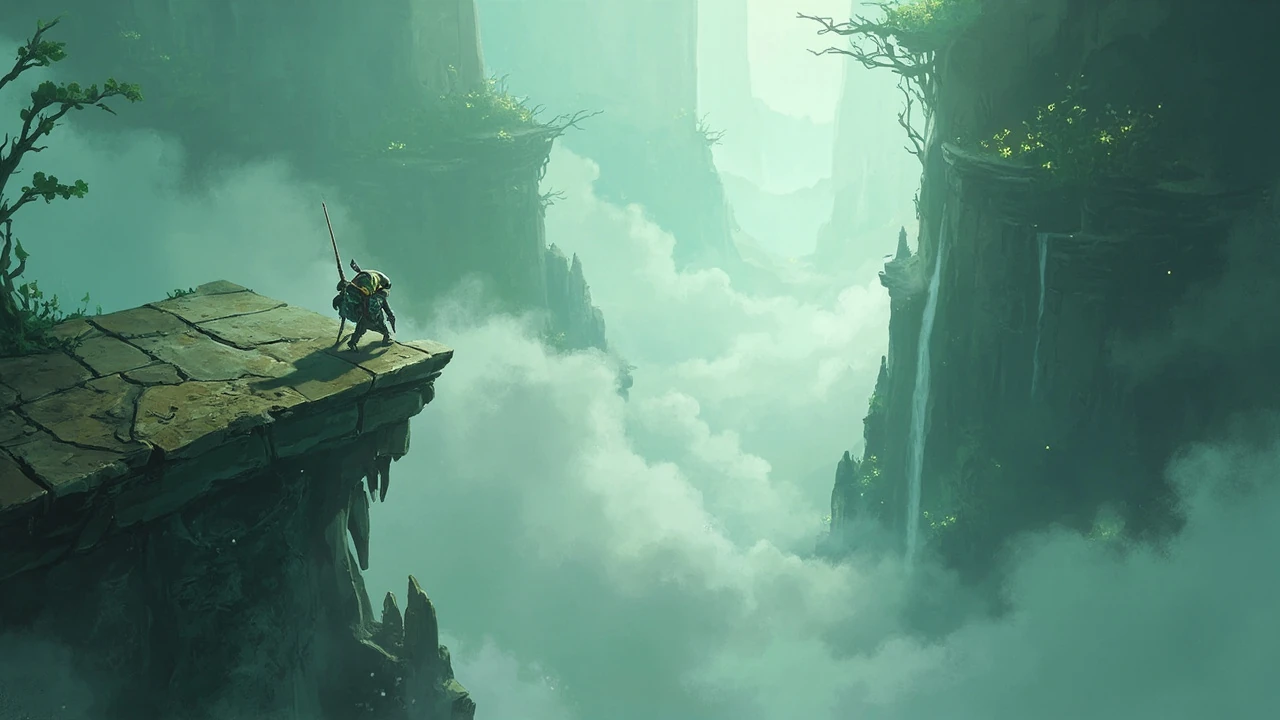
The mist in Silksong and why it matters to Hollow Knight’s sequel
A reader looking for the mist in Silksong is usually chasing a specific question. The phrase has circulated in previews, community wikis, and fan compilations as if it referred to a named place or a named mechanic, when in practice it tends to surface as a recurring visual and atmospheric condition across large portions of the Pharloom map. Treating the term as a hand-curated label rather than a game-shipped title keeps the discussion honest, because Team Cherry has not officially released a feature, biome, or quest with the exact name “The Mist” as a public label.
For an editor working in game development, the useful angle is therefore descriptive rather than investigative. The mist is a real, recurring visual system in Hollow Knight: Silksong, and it shapes level design, traversal, encounter design, and the player’s mental map of the kingdom. The right article for a GameDev audience is one that explains how a fog system like this gets designed, what it does for pacing and readability, and where players can expect it inside the sequel’s announced structure. That framing respects the keyword without inventing a feature that has not been officially confirmed under that exact name.
To keep that framing defensible, every claim in this article is anchored to material that has been publicly shown or written about the sequel: official announcements, publicly available store pages, the original Hollow Knight release for comparison, and observable behavior in the original game that the sequel clearly extends. A short table later in the article separates what has been confirmed, what has been observed in previews, and what remains community interpretation, so a reader can quickly judge the weight of each point.
The mist in Silksong is best understood as an environmental system, not a single level. It is the cumulative effect of layered fog volumes, parallaxed background haze, and animated particle fields that the team has used to give Pharloom a different feel from Hallownest. For a developer reading this, the system is a case study in how atmosphere, navigation, and combat readability are balanced together, which is what the rest of the article will unpack.
What players and previewers mean by “the mist”
When someone types the mist silksong into a search bar, they are usually looking for one of three things. The first is a place, in the sense of a region on the in-game map that is dominated by fog. The second is a mechanic, in the sense of a system that limits visibility, blocks line of sight, or alters how the player reads the screen. The third is a mood, in the sense of the visual identity that the sequel uses to feel distinct from its predecessor. All three interpretations appear in community discussion, and any one of them can be what the reader actually wants.
The cleanest way to handle that ambiguity is to acknowledge each reading without pretending that any of them is the canonical answer. The sequel’s promotional material, public store descriptions, and shown previews consistently describe Pharloom as a haunted kingdom of silk and song, with a tone that is lighter in palette but denser in crowd encounters than Hallownest. Visual coverage from hands-on previews and trailers shows recurring fog across multiple regions rather than a single dedicated biome, which is the key reason the phrase has spread as a label rather than as an official term.
For comparison, the original Hollow Knight used dark caverns, fungal glow, and shaded greens and blues as its dominant visual mood. The team had to communicate distance and danger primarily through contrast and silhouette because most of the world sits underground. In the sequel, the team is working with a kingdom that is built upward, with spires, bridges, and vertical corridors, and the mist serves a different function: it softens the far plane, suggests depth, and reduces the visual noise that would otherwise clutter a scene full of architectural detail.
How the mist functions as a design system
Atmospheric fog in a 2D game is rarely a single effect. It is normally a stack of layers: a far-background tint that pulls the horizon toward a single hue, a mid-ground volumetric layer that suggests thickness, a near foreground haze that can carry particles, and gameplay-driven elements like lingering clouds, smoke from braziers, or wind-blown wisps that move with the player. The mist in Silksong appears to use that stack deliberately, because the shown previews switch between clean platforming sightlines and dense curtain-like moments depending on the section being demonstrated.
The practical value of that stack is that fog becomes a tool the level designer can dial up or down. A platforming section over a long drop benefits from a soft mid-ground haze because it tells the player how far down the chasm goes without forcing the artists to model an enormous background. A combat encounter against multiple flying enemies benefits from a thinner, near-camera fog because the player needs to read incoming threats clearly. By treating fog as a per-room setting rather than a global filter, the design team can shift the same visual system between clarity and obfuscation without breaking continuity.
The sequel’s combat model also interacts with the fog system. Hornet, the protagonist, is faster, more airborne, and more aggressive than the Knight. Long-ranged enemies and aerial threats are a larger share of the encounters, which is consistent with previews describing Pharloom as a kingdom of “bards and knights” with a more theatrical tone. A clean sightline is essential for that style of combat to read well, and the way fog is layered in the shown footage suggests that the team is using the atmosphere to keep the focus on the foreground where the action happens.
Atmosphere, readability, and player navigation
Readability is the silent workhorse of any 2D platformer with dense scenery. If the player cannot tell where the floor is, where a hazard begins, or how far a jump reaches, the design has failed regardless of how beautiful the scene looks. Fog is a useful readability tool precisely because it can hide information the player does not need while keeping the information they do need visible. The far plane becomes a soft color wash, which removes background detail that would otherwise compete with foreground geometry, and the mid-ground haze gives the player a perceptual cue about depth.
For a player exploring a new area, this matters because navigation in a Metroidvania is a constant cycle of scanning, committing, and backtracking. Fog helps the eye settle on the next platform because the distant scenery recedes into a uniform color. In the original game, that role was played by cavern darkness and the soft glow of Lumafly lanterns. In the sequel, the team appears to be using atmospheric haze and silhouette shading to perform the same function with a brighter, more vertical palette.
The way the mist interacts with traversal cues is also worth noting, because it changes what the level designer can rely on.
- Foreground clarity: the player’s platform, the next two jumps, and any immediate enemy should sit in the cleanest visual layer, so the mist layer does not interfere with combat or platforming reaction time.
- Mid-ground suggestion: architectural shapes, suspended bridges, and the tops of spires should fade into a softer haze so the player perceives depth without mistaking background geometry for solid ground.
- Background mood: the deepest layer should reduce to a near-uniform tint, removing the temptation for the player to read distant pixels as a path forward.
- Particle motion: drifting wisps, falling motes, and floating debris should move in a direction that matches the wind or vertical flow, so the player can use them as a low-cost signal for the level’s intended pacing.
For a developer reading this, the takeaway is that atmospheric fog is not decoration. It is a tool that the level designer, the technical artist, and the combat designer have to agree on, because a fog setup that looks good in a static shot can become unreadable the moment five enemies enter the room.
How the mist fits Pharloom’s region layout
Pharloom has been described in the sequel’s public material as a kingdom ruled by silk and song, organized around citadels, choral halls, and a range of biomes that include the Citadel, the Deep Docks, the Far Fields, Greymoor, Bellhart, and several locations revealed through promotional screenshots and previews. The mist is not tied to a single one of those regions. It appears as a recurring atmospheric condition across a range of biomes, particularly those that the team wants to read as vast, vertical, or architecturally exposed.
The cleanest way to map this is to separate the regions into two categories based on the visual evidence that has been shown. The first category is regions where the atmosphere reads as bright, structured, and cleanly readable, with spires, banners, and a soft daylight palette. The second category is regions where fog is dense, the silhouettes are softer, and the far plane is reduced to a tint. Knowing which kind of region the player is in changes the expected pacing: clean regions tend to favor platforming and group combat, while fog-heavy regions tend to favor exploration, vertical climbs, and a slower reveal of the next safe platform.
| Region type | Atmosphere | Typical mist presence | Gameplay focus |
|---|---|---|---|
| Citadel and choral halls | Structured, lit, vertical architecture | Light haze, used for depth | Platforming, choral combat, NPC dialogue |
| Outer fields and far landscapes | Wide, airy, exposed | Strong mid-ground haze, drifting particles | Long traversal, long sightlines, ranged enemies |
| Cavernous or sunken regions | Dim, layered, soft | Dense near-camera fog, low contrast | Short-range combat, careful jumping, secret hunting |
| Crowd and festival spaces | Theatrical, busy, colorful | Reduced fog to keep characters readable | Stealth, rhythm, group encounters |
This table is intentionally a design-oriented map rather than a confirmed walkthrough. The official sources describe the kingdom in broad strokes, and the entries here reflect how the public previews read, not a guarantee of which exact region will use which kind of fog setup.
Combat, enemies, and how fog affects encounter design
Combat in the sequel is built around Hornet’s tool set, which is faster and more aerial than the Knight’s. A long needle, a silk-based ranged option, a downward pounce, and quick wall jumps give the player a combat vocabulary that is designed to feel like a duelist rather than a wanderer. The way enemies are designed has to match that vocabulary, and the way fog is set up has to support it.
For most combat rooms, the practical design rule is that the player should be able to read the screen in under a second after entering. That means the immediate enemies, the player’s character, and the next platform need to sit on a clear visual layer. Fog should be tuned to enhance that readability rather than fight it. A common mistake in atmospheric games is to apply a global fog value that looks beautiful in screenshots but turns combat into guesswork. Teams that avoid that mistake usually set up fog per room, blend the layers manually, and run playtests with the fog dialed up and dialed down to find the threshold where the screen still reads.
A few concrete rules that the previews of Silksong appear to follow, and that a developer reading this can apply in their own project, are worth listing here.
- Reserve heavy fog for rooms where the action is short-ranged or where the fog itself is the puzzle, because long-range combat needs clean sightlines.
- Pair fog with parallaxed lighting so the foreground stays the brightest layer; lighting and fog together carry most of the readability work.
- Use particle motion to suggest wind, falling, or heat, because moving fog reads as “alive” while static fog reads as “broken” or “loading”.
- Tie fog density to the player’s vertical position when possible, so a chasm feels deeper not just because the art is taller but because the haze is thicker the further down the player looks.
Traversing the mist: a developer’s view of movement design
Traversal in a Metroidvania is a system of promises. The player sees a high ledge, a far platform, or a closed door and assumes there is a way to reach it. Fog is a powerful tool for that system because it can hide a future promise just enough to feel like a secret without making the player feel lost. In the shown previews of the sequel, the team has used fog to mask off the tops of spires and the far sides of large chambers, then revealed them as the player gains new movement abilities. That is a classic application of progressive disclosure in level design, and it is a technique a developer can adopt regardless of engine.
The For additional context, interesting part of Silksong’s traversal design is that the team’s tool set is built around silk. Silk is the resource that powers healing, certain abilities, and the trap and binding mechanics. That means a player reading the environment through fog is also reading a resource budget. If the area is dense, vertical, and covered in haze, the player should expect a tighter resource loop and a smaller margin for error. If the area is open and the fog is light, the player can plan for longer engagements and bigger jumps.
| Traversable element | How fog is typically tuned around it | Reader signal for the player |
|---|---|---|
| Vertical climb with a known endpoint | Thicker mid-ground haze as the player ascends | This climb is long, plan silk accordingly |
| Wide platforming across a chasm | Soft far-plane tint, clean near-camera layer | The far side is reachable, focus on the path |
| Hidden side room or short cut | Localized near-camera haze, reduced parallax | Look closer, something is in this corner |
| Set-piece arena or boss | Reduced fog, dramatic lighting | Drop the navigation, this is a fight |
None of these are official labels attached to specific rooms in the sequel. They are patterns that fit the public previews and the general design language of the original game, and they are useful for a developer who wants to apply the same ideas to a different project.
Comparing the mist to the original Hollow Knight’s atmosphere
The most direct comparison a reader can make is with the original game, and that comparison is a useful one because it shows how the same studio uses a different visual system to support a similar set of design goals. Hollow Knight was set in Hallownest, an underground kingdom of bugs whose beauty came from the contrast between dark caverns and soft bioluminescent glow. The sequel is set in Pharloom, a vertical kingdom of silk whose beauty comes from the contrast between hard architecture and soft atmosphere.
To make the contrast explicit, the two games can be placed side by side on a small set of attributes that a designer can read at a glance.
- Light source: Hollow Knight relied on Lumafly lanterns, fungal glow, and the player’s own light radius. Silksong appears to use a brighter global light with localized shadows and skylight pouring through the architecture.
- Depth cue: the original used darkness to hide distance. The sequel uses haze and tint to do the same job with a brighter palette.
- Sound: the original used a slow, mostly ambient score with occasional loud cues. The sequel’s promotional material describes a kingdom of “song” with choral themes, which is a different cue for the player about safety versus danger.
- Player vocabulary: the Knight was a slow, methodical explorer. Hornet is a fast, expressive duelist. The atmospheric system is tuned to that new vocabulary, which is why the far plane is allowed to read as soft and the foreground is forced to read as crisp.
For a reader who only knows the original, the cleanest framing is that the mist in Silksong is doing for the sequel what darkness did for the original, but in a brighter, more vertical, more crowded kingdom. The team is not repeating the original’s mood; they are reusing the principle of using atmosphere to direct the player’s attention.
Confirmed, observed, and community interpretation
Because the phrase “the mist” has not been officially used as a feature, biome, or quest name by Team Cherry, an honest article has to separate the different kinds of evidence that a reader might find. The table below is a practical way to do that. It is not a list of spoilers, and it does not pretend to know more than the public sources do. It is a way of sorting the existing material so a developer can decide how much weight to give each claim.
| Claim type | Example | Source quality | Weight to give the claim |
|---|---|---|---|
| Confirmed by official material | Pharloom is a haunted kingdom ruled by silk and song; the protagonist is Hornet; silk is the central resource | High | Use directly |
| Observed in public previews | Fog appears across multiple regions; some sections are dense, others are clean; the silhouette style is consistent | Medium | Use as a design observation, not a feature announcement |
| Community interpretation | “The mist” is a specific named biome, a hidden mechanic, or a unique quest trigger | Low | Acknowledge, do not present as fact |
| Speculation or wishlist | A specific secret area is unlocked only in fog; a particular enemy appears only when fog is dense | None | Do not present as fact |
The honest position is that “the mist” is best read as a descriptive label for the sequel’s atmosphere rather than a confirmed game term. A developer or player can use it as a shorthand, and that is perfectly fine, but it should not be cited as if it were an official name.
What a developer can take from the mist in Silksong
For a developer reading this article, the practical value of the mist discussion is not the specific feature. It is the underlying system. The team is using atmosphere as a per-room parameter, layered with lighting and particle motion, and tuned to support a specific combat and traversal vocabulary. That pattern is portable to other 2D games, and it works in any engine that supports per-camera or per-region fog volumes.
To put that into a short list of working principles, the following points summarize the design lessons that the sequel’s atmosphere appears to demonstrate, and that a developer can apply on their own project.
- Treat fog as a per-room setting, not a global filter, so each section can tune the tradeoff between mood and readability.
- Stack at least three layers: a far-plane tint for depth, a mid-ground haze for distance, and a near-camera particle layer for movement and life.
- Pair every fog change with a lighting change so the player’s eye has a single, consistent cue for where to look.
- Use fog to hide promises the player cannot yet reach, and to reveal them once the player has the right traversal ability.
- Test the heaviest fog setups in actual combat, because a fog value that reads well in a still shot can become unreadable the moment multiple enemies enter the room.
- Reserve the densest fog for short-range combat or puzzle spaces, where the fog itself becomes a gameplay element rather than a hazard to readability.
These are not unique to the sequel. They are general design principles that the original game applied with darkness and that the sequel appears to be applying with haze. They are worth keeping in a team’s atmospheric design checklist regardless of the engine or the genre.
Why the mist has become a community shorthand
The phrase has spread because it captures something real. Players notice when an atmosphere is doing the heavy lifting in a game, and they often reach for a short label to talk about it. In the original game, fans talked about “the abyss” as both a place and a mood, and the team leaned into that with the visual design of that region. In the sequel, “the mist” is filling a similar role. It is a shorthand for the kingdom’s visual identity, the way the sequel feels different from the original, and the moments in previews that left a strong impression.
For an article to be useful, it has to respect that shorthand without overclaiming. The right read is that “the mist” is the cumulative atmospheric effect that the sequel uses to give Pharloom its own identity. It is not a confirmed biome, a unique mechanic, or a secret quest trigger. It is the result of layered fog, soft lighting, and vertical architecture working together to shape how the player reads the screen.
A player searching for the mist in Silksong is, in most cases, looking for confirmation that the sequel’s atmosphere is intentional, and that the visual feel they have seen in trailers is consistent with how the game actually plays. The honest answer is that the visual identity is real, the atmospheric system is doing real design work, and the way the team has used fog is a useful case study in how to make a 2D world feel large and readable at the same time. That is a meaningful answer, and it is the one that respects both the keyword and the actual game.
Frequently asked questions
Is “the mist” an official place or feature in Hollow Knight: Silksong?
There is no public official material that uses the exact phrase “the mist” as the name of a place, biome, quest, or feature in Hollow Knight: Silksong. The term is best read as a community label for the dense atmospheric fog that appears across several regions of Pharloom. The original game and the sequel’s promotional material describe the world in different language, and any reference to “the mist” should be treated as descriptive shorthand rather than a quoted in-game label.
Does the mist affect gameplay, or is it only visual?
Visuals and gameplay are tightly linked in the sequel’s design, and fog is part of how the game communicates distance, danger, and pacing to the player. In practice, dense fog limits long-range visibility, which changes how the player approaches ranged enemies, and lighter fog gives the player more sightlines for aerial combat. The fog itself is not a separate mechanic with its own rules, but it shapes how readable the screen is, which is a gameplay factor in any action platformer.
Which regions of Pharloom are most affected by the mist?
Public previews and promotional material show fog as a recurring condition across several regions rather than a single dedicated biome. Outer landscapes, cavernous spaces, and tall vertical chambers tend to use heavier haze, while structured choral halls and crowded festival spaces use lighter fog to keep characters readable. Because the sequel’s map has not been fully documented in public sources, the exact regions that use each setup can only be described in general terms.
How does the mist in Silksong differ from the atmosphere in the original Hollow Knight?
The original Hollow Knight relied on underground darkness and localized glow to communicate depth and focus, while Silksong uses a brighter global palette with layered haze and skylight to perform a similar role. The original used a slow, mostly ambient score and a methodical exploration pace, and the sequel is designed around a faster, more aerial combat vocabulary with a choral, theatrical tone. The mist is the visual side of that shift, while combat and music are the audio and mechanical sides.
Is the mist related to a specific enemy or boss in the sequel?
There is no public confirmation that the mist is tied to a specific enemy, boss, or quest trigger in the sequel. Some community discussions have suggested that particular encounters feel more difficult because of low visibility, but that is an observation about readability rather than a confirmed mechanic. A reader looking for a specific encounter should rely on the official sources and treat community speculation as commentary rather than fact.
Does the mist change the way the player should manage silk?
Resource management in the sequel is built around silk, and atmospheric conditions influence how the player reads a space before deciding how to spend that resource. Dense fog tends to favor short engagements, careful platforming, and tighter silk budgets, while clean sightlines allow for longer jumps, more aggressive healing, and bigger crowd control plays. Players who learn to read the atmosphere can plan their silk use more efficiently, which is one of the quieter skills the game teaches.
Can the mist be cleared or reduced during gameplay?
Public material does not describe a system in which the player actively clears or reduces the atmospheric fog as a gameplay action. The mist behaves as a per-region visual setting that the team has tuned for each area. Players may notice that certain sections have very clean visibility and others feel heavily obscured, and that contrast is part of how the sequel’s level design signals pacing and challenge.
How does the mist interact with the sequel’s map and fast travel?
Navigation in the sequel is built around a central bench system, regional waypoints, and progressive ability unlocks, in the same tradition as the original game. Atmospheric fog affects how the player reads a section of the map but does not appear to block the map or the fast travel system itself. Players who want a clear mental model of the world are encouraged to rely on the in-game map and the bench network rather than on visual memory, because the atmosphere is tuned for mood, not for navigation.
Why does the sequel use so much atmospheric fog compared to the original?
The sequel is set in a vertical kingdom of spires, bridges, and choral halls, which is visually busier than the original’s underground caverns. Fog gives the level designer a way to manage that visual density by reducing the far plane to a soft tint and keeping the player’s attention on the foreground. It is a readability solution as much as it is an aesthetic choice, and it scales well with the sequel’s faster combat and longer sightlines.
Is “the mist in Silksong” a good search term for finding reliable information?
The phrase is useful as a starting point, but the most reliable information lives on the official Hollow Knight: Silksong page, the team’s public announcements, and previews from outlets with a track record of accurate game coverage. Because the term is community shorthand, search results can mix confirmed details, design observations, and speculation. Cross-checking the phrase against an authoritative overview of the original game and the sequel’s known differences is the safest way to get a clear picture of what is actually in the game.

Leave a Reply