
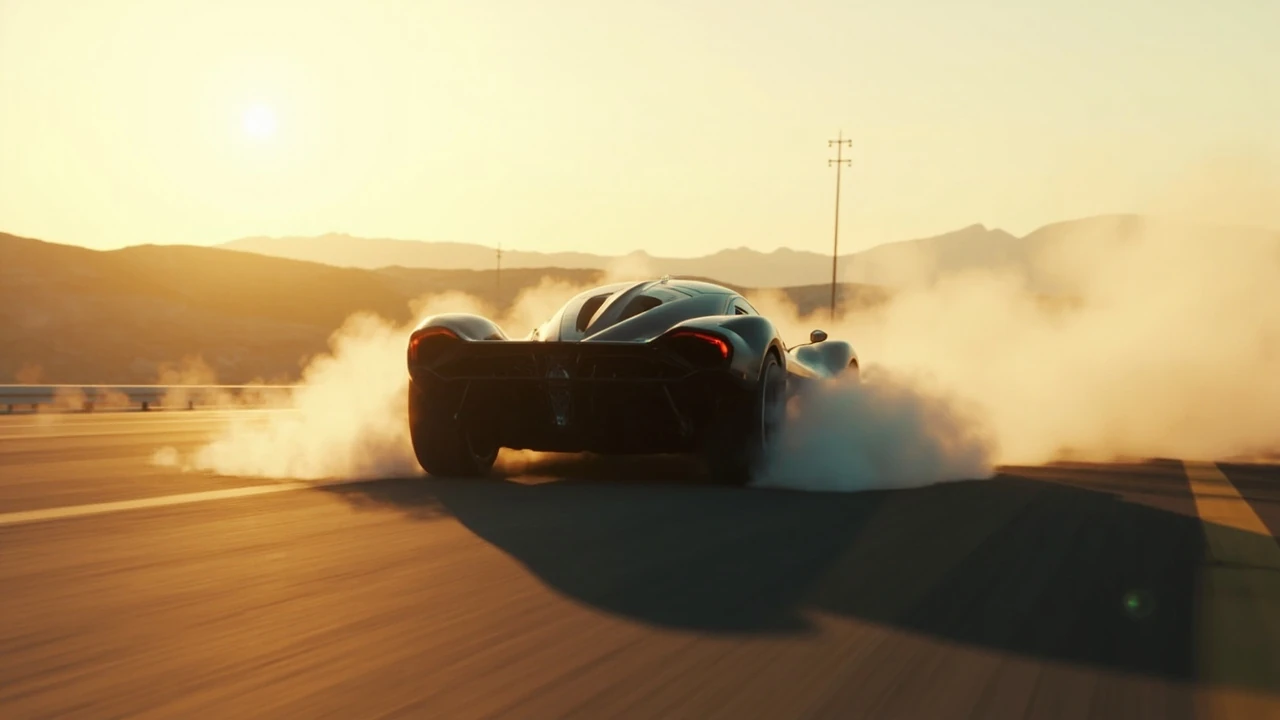
Fastest car in Forza Horizon 6 and what actually decides top speed
Forza Horizon 6 has not been released at the time of writing, so any specific in-game record for the fastest car in Forza Horizon 6 is, by definition, speculative. What is not speculative is how Playground Games models top speed in the Forza Horizon series: a long-form arcade-sim hybrid that wraps simulation-grade tire and suspension physics around a forgiving driving model. Players chasing the fastest car in Forza Horizon 6 will be chasing the same outcome players have chased since Forza Horizon 2 on Xbox 360: a build that maximizes the velocity reading on the speedometer at the end of a long, flat straight under ideal weather, with the lightest possible drivetrain loss and the smallest possible drag coefficient.
This article focuses on the developer-grade mechanics behind that chase. Rather than name a single car, it explains the engineering and design choices Playground Games tends to make when handing a player a hypercar in a Forza Horizon title, and it walks through how a tuner can systematically push a build toward the theoretical top speed the engine will allow. Where the series has shipped, the article references the live tuning and physics behavior of prior entries so the explanations are grounded in shipped code rather than rumored data.
How Forza Horizon models top speed, drag, and power
Forza Horizon uses a vehicle simulation shared with the Forza Motorsport line, adapted for open-world driving. The same physical building blocks that govern cornering in a rally car govern straight-line speed in a hypercar, and the fastest car in Forza Horizon 6 will be the car the developers tuned with the smallest drag and the highest usable power band on the game’s longest straights.
Three internal values drive that result:
- Peak power at the wheels. Forza’s engine takes the engine’s flywheel horsepower, applies a drivetrain loss percentage that varies with drivetrain type and gear count, and reports the value available at the contact patch. The same 1,000 horsepower engine reads very differently in a seven-speed dual-clutch than in a four-speed automatic with a torque converter.
- Effective drag coefficient and frontal area. Drag is a function of the body’s shape and the player’s aerodynamic parts. A stock hypercar and the same hypercar with a Forza Vision body kit and low-profile wing can differ by 15-25 percent in top speed on a long enough straight.
- Final drive and gear spacing. Top speed is the gear at which peak power crosses the drag curve. A tuner chasing the absolute limit usually lengthens the final drive and picks a top gear wide enough that the engine can stay near redline without bouncing off the rev limiter.
Forza Horizon 2 is a useful reference point for how the series has historically handled these variables in an open-world setting. The For additional context, Forza Horizon 2 entry documents the move to the Xbox One generation and the wider road networks that gave the engine more room to express top speed. The Ars Technica review of that same launch captures how the car list and the road scale combined to make top-speed runs feel meaningful for the first time in a console Horizon title, as explained in the Ars Technica Forza Horizon 2 hands-on, which provides useful background for this point.
Why the fastest car in Forza Horizon 6 is more than one car
Forza Horizon rosters are not single-tier lists. They span hot hatches, rally cars, muscle cars, grand tourers, track toys, and hypercars, and each tier reaches a different top-speed ceiling for structural reasons. Hot hatches hit an early limit because their drag is high relative to their power and their gearing is short. Grand tourers hit a similar limit but at a higher velocity because the bodywork is cleaner. Hypercars hit the highest velocities because the engine can sustain 1,000 horsepower at the wheels and the body is shaped to slip through air efficiently.
That means the phrase “fastest car in Forza Horizon 6” is ambiguous, and a player can be talking about four different definitions at once.
The four working definitions players actually mean
- Stock top speed: the speedometer reading on a stock, no-tune car on a flat highway with default tire compound and default gearing. This is what a player sees within the first five minutes of opening the car menu.
- Tuned top speed: the same car after drag tires, the longest final drive, the lowest ride height, and the most efficient aerodynamic parts. This is usually 8-15 percent higher than stock on the same car.
- Rival-event top speed: the speed a player can maintain through a Horizon story event such as a Danger Sign, Speed Trap, or Drift Zone. This is lower than a free-run number because events include scoring zones, corners, and traffic.
- Forzathon and seasonal top speed: the speed a car can reach under specific seasonal or challenge modifiers, including forced tire compound and forced drivetrain swaps. This is a constraint problem, not a free-tuning problem.
When someone asks about the fastest car in Forza Horizon 6 in a forum thread, the first useful reply usually asks which of these four they are chasing. The answer for a Speed Trap is rarely the answer for a half-mile drag build.
Drivetrain choices that change top speed
Drivetrain is the easiest place to lose or recover top speed without touching the engine. Forza Horizon exposes AWD, RWD, and FWD swaps through the Upgrade menu, and each has a different power transfer efficiency at high rpm.
Drivetrain efficiency at the contact patch
| Drivetrain | Typical power loss at the wheels | Top-speed impact | Best use case |
|---|---|---|---|
| Front-wheel drive | 12-18 percent | Lowest of the three | FWD-specific challenges, drift grip hybrids |
| Rear-wheel drive | 8-12 percent | Highest single-axle efficiency | Drag builds, top-speed runs, classic muscle |
| All-wheel drive | 14-22 percent | Best launch, lower top | Launch control trials, off-road events, rain |
The fastest car in Forza Horizon 6 will almost certainly be tuned to RWD for the final gear, even if the stock car shipped AWD. Forza Horizon’s drag transmission is the same part that ships on Forza Motorsport road cars, and the swap is reversible. The 8-12 percent power loss in RWD versus the 14-22 percent in AWD translates into a real top-speed difference on a long enough straight because drag scales with the square of velocity, so a 10 percent loss at the wheels compounds across the speed range.
Tire compound and how it changes a top-speed run
Forza Horizon offers Drag, Street, Sport, and Rally tire compounds. Each compound has its own friction curve, and each compound has its own rolling resistance. For a top-speed run, the relevant metric is rolling resistance, because the engine has to overcome rolling resistance and aerodynamic drag in steady state.
Rolling resistance by compound (representative values)
| Compound | Relative rolling resistance | Top-speed impact versus Drag | Stability at high speed |
|---|---|---|---|
| Drag | Lowest in the game | Reference baseline | Low; twitchy at sustained high speed |
| Street | Low to moderate | 1-3 percent lower than Drag | Moderate |
| Sport | Moderate | 3-6 percent lower than Drag | High |
| Rally | Highest in the dry | 5-10 percent lower than Drag | Highest in the dry |
Drag tires are not always the right answer for a top-speed run. A Speed Trap is typically reached through a corner, and Drag tires on a wet road are effectively unplayable. A tuner who wants a single build for the entire Horizon Open catalog usually runs Street compound and accepts the small top-speed penalty in exchange for grip in mixed weather.
Aerodynamics, ride height, and the drag curve
Forza Horizon’s aero parts are not cosmetic. Each part has a published drag value and a published downforce value, and those numbers are applied in a single combined calculation. A rear wing can be specified as low-drag, balanced, or high-downforce, with the high-downforce version raising downforce and raising drag. For a top-speed run, the right answer is always the lowest-drag wing, even if that means the car is unstable at 300 km/h.
Ride height is the second silent drag contributor. Forza Horizon’s suspension geometry is fully simulated, and lowering the car reduces the air going under the chassis. The simulation treats the underbody as a separate airflow region, and a high front splitter plus a low ride height can reduce drag by 4-7 percent on a hypercar. That is a real number at 300 km/h, where a 4 percent drag reduction is several kilometers per hour of top speed.
For a top-speed run, the recommended setup sequence is:
- Remove the front splitter if it is high-downforce and replace it with a street splitter or no splitter.
- Set the rear wing to the lowest drag variant, usually labeled as “Forza Aero” or “Street Wing” in the menu.
- Lower the front and rear ride height to the minimum allowed by the tire compound without scraping the body.
- Stiffen the anti-roll bars to reduce body roll at high speed. This does not change top speed directly, but it changes the player’s ability to hold a straight line at the limit.
Gearing and final drive: where the velocity ceiling actually lives
Forza For additional context, Horizon exposes seven gear ratios and a final drive through the Tuning menu. Each ratio is a multiplier from the engine’s rotational speed to the wheel’s rotational speed, and the final drive is the global multiplier that affects all gears. The top gear determines where the engine redline lands relative to the drag curve.
A general-purpose top-speed build follows three rules:
- Lengthen the final drive. Move the slider to the longest available value. This drops the engine rpm at any given road speed and lets the engine stay near peak power at higher road speeds.
- Spread the top three gears evenly. A 1.0, 0.85, 0.73 progression is a reasonable default. The exact values depend on the engine’s power band, but the top gear should be the widest of the three so it carries the car past the second-gear redline.
- Test the rev limiter on a flat highway. The fastest car in Forza Horizon 6 will hit the rev limiter at top speed in stock form. A correct top-speed tune moves the limiter out of the way by lengthening the top gear so the engine reaches drag equilibrium just below redline.
This is the single biggest tuning lever the player controls. A correct gear change can move the top-speed reading by 10-20 km/h on a hypercar without changing the engine, the tires, or the aero.
Weather, altitude, and the things the simulation does not always show
Forza Horizon simulates weather and altitude, and both reduce the effective density of the air the engine breathes. The drag term scales with air density, and the engine’s volumetric efficiency scales with air density, so the two effects partially cancel out at high altitude. The fastest car in Forza Horizon 6 will be fastest in dry conditions at the lowest altitude in the map, which is typically a coastal highway.
Horizon also has seasonal conditions that rotate weekly. A rainy week will drop top-speed numbers by 5-10 percent because the engine’s air intake, the drag from rain on the body, and the tire rolling resistance all increase simultaneously. Players chasing records usually target the dry, summer, or dry spring seasons and avoid the wet season entirely.
Where the top speed reading actually comes from
Forza Horizon’s speedometer and event scoring use a single internal velocity value in meters per second, and the on-screen display is converted to km/h or mph depending on the player’s region setting. The internal value is the magnitude of the car’s world-space velocity vector, which means that sliding sideways at 300 km/h will read lower than driving straight at 300 km/h. That matters for Speed Traps, which are scored on the velocity the car reads as it crosses the scoring zone.
Three practical implications follow:
- Drift penalties. A car drifting through a Speed Trap at a high slide angle will read lower than a car driven straight. Top-speed tuners therefore use drag tires and a straight-line approach, even on cars that are otherwise grippy enough to drift.
- Wind assistance. Horizon does not implement a global wind model in the same way a flight simulator does, but the engine does simulate a per-zone wind value for dust and particles. The impact on the velocity vector is small but not zero, and a player running a Speed Trap in a tailwind corridor will get a fraction of a kilometer per hour more than the same player running into a headwind.
- Vehicle-on-vehicle drafting. A car following another car at a one-car-length gap will read slightly lower than the same car in clean air because the lead car’s wake adds turbulence. Drafting is useful for passing, not for top-speed scoring.
What the record tables actually measure
Forza Horizon’s leaderboards are populated by speed, drift, and trick scores. Speed events are scored on the highest velocity reading during the run, and the leaderboard is sorted by that reading in the player’s chosen unit. Two players on different platforms can post different numbers because the conversion to km/h and mph happens at the display layer, not the simulation layer.
The fastest car in Forza Horizon 6, as a leaderboard artifact, is therefore a number with three layers:
- The simulation’s internal velocity in meters per second.
- The conversion to the player’s regional unit, km/h or mph.
- The conversion back into a single score string for the leaderboard.
Players who care about a precise number compare the underlying meters-per-second value rather than the displayed km/h, because a 0.1 m/s difference rounds to a different integer in mph than in km/h. This is also why a US player and a European player on the same track can post different “world records” against the same internal run.
Reference builds a tuner can use as a starting point
Because Forza Horizon 6 is not yet released, no specific tunes can be verified. A tuner chasing the fastest car in Forza Horizon 6 should start from the most recent live entry in the series, Forza Horizon 5, and use the existing knowledge of the physics and tuning menus to plan a build. Three reference patterns transfer across the series.
Pattern 1: the half-mile drag build
- RWD swap, drag transmission, drag tires
- Race clutch, race gearbox, seven-speed with a wide top gear
- Stock or upgraded engine, no forced induction swap unless the engine already has it
- Forza Aero front bumper, no splitter, low rear wing, low ride height
- No anti-roll bar stiffening, soft rear suspension for weight transfer
Pattern 2: the Speed Trap build
- RWD or AWD depending on the stock car, racing gearbox with a long final drive
- Sport tires for a clean entry into the scoring zone
- Race brakes, race suspension, adjustable anti-roll bars
- Street front splitter, low rear wing, low ride height
- Drivetrain cooling only on cars known to overheat on long straights
Pattern 3: the seasonal all-rounder
- Stock drivetrain unless the season forces a class change
- Street compound for weather flexibility
- Race gearbox with a moderate final drive, not the longest
- Forza Aero front, Forza Aero rear, neutral ride height
- Drivetrain cooling and race brakes as a default
These are starting points, not finished tunes. A finished tune is the result of a personal driving style matched to a specific map, and the fastest car in Forza Horizon 6 will be the car that lets a particular player repeat the build and the drive on the same highway for ten consecutive runs.
How Playground Games decides which cars go fastest
Forza Horizon’s car list is not curated by top speed alone. For additional context, Playground Games selects cars to fit a series identity that includes motorsport history, regional availability, and visual drama. The fastest car in Forza Horizon 6 will be one of the cars the developers chose for the cover and the launch trailer, and the developers will have tuned those cars last so they are competitive in the launch event list.
From a developer perspective, three classes of car tend to lead the top-speed tables in a new Forza Horizon title:
- The new cover hypercar. The cover car is almost always a hypercar with a clean shape and high power. Playground Games tunes it to be competitive in Speed Traps, and the cover car tends to lead the public leaderboards for the first 30 days after launch.
- The returning fan favorite. A returning hypercar from Forza Horizon 4 or 5 with a known top-speed ceiling. Returning cars keep their stock data, so a returning car can be a known quantity before the first event is even played.
- The new DLC hypercar at launch.
If the launch includes a VIP car or a Day One car pack, that pack usually contains a hypercar tuned to be the new top-speed reference. The introduction of a new pack effectively resets the public top-speed records.
Forza Horizon 2 followed a similar pattern when it launched, and the Ars Technica review of the original release notes how the launch car list paired returning Forza Motorsport hypercars with new additions tuned for the open world. The same logic will almost certainly apply to the fastest car in Forza Horizon 6 at launch, even if the specific names have not been published.
What a developer can learn from the chase for top speed
The chase for the fastest car in Forza Horizon 6 is, from a developer perspective, a useful design probe. It tells the team where the simulation’s tuning surface is responsive and where it is rigid, and it tells the team which cars are over- or under-tuned in the stock state. A few lessons carry across the series.
Lesson 1: top speed is a tuning decision, not a content decision
A car with 1,200 horsepower and a 0.32 drag coefficient is not automatically faster than a car with 900 horsepower and a 0.28 drag coefficient. The simulation’s drag model rewards shape more than power past a certain threshold, and the right answer is usually a balanced setup rather than a maxed-out engine.
Lesson 2: the open world defines the achievable top speed
Forza Horizon 2’s move to a larger map with longer straights raised the top-speed ceiling for the entire roster, and the same effect will appear in any new Horizon entry with longer or flatter roads. The fastest car in Forza Horizon 6 will, in part, be defined by the map’s longest straight.
Lesson 3: the tuning menu is a content surface
Players spend hours in the tuning menu for cars that they could not otherwise differentiate. A car that the player tunes themselves feels different from a car that the player buys off the lot, even if the simulation’s internal values are identical. Playground Games leans into this by exposing seven gear ratios, a final drive, anti-roll bars, and individual camber/toe settings, and the depth of that menu is itself a design choice.
Lesson 4: leaderboard psychology drives the meta
The first 30 days of a Horizon launch are dominated by the cars that appear in the launch trailer and the cover art. After that, the meta shifts to whichever cars the community discovers are top-speed leaders on the new map. This is normal for a live game with a public leaderboard, and a developer reading the public leaderboard after launch will see the actual top-speed meta faster than any internal test will reveal it.
How to validate a top-speed build
A build that looks fast in the menu is not always fast on the road. A top-speed run needs a repeatable test.
- Pick a flat, straight section of highway with no AI traffic and no elevation change. The Horizon series always has at least one such section on the main road network.
- Set the time of day to clear, dry conditions. Use the photo mode or the map weather controls if available.
- Run the car in a single direction five times in a row. Note the peak velocity reading in each run.
- Average the top three of the five runs. The fastest run is a fluke; the average is a real number.
- Compare the average to a stock run on the same car. The difference is the tuning gain.
That procedure gives a single number per build, and that number is the only honest answer to “how fast does this car go.” Anything else is a single-run anecdote.
Common pitfalls in top-speed tuning
The most common ways a top-speed build fails in a Forza Horizon title are well-known, and a careful tuner avoids them up front rather than discovering them on the leaderboard.
Pitfall 1: over-downforced wing
A high-downforce rear wing adds grip but adds drag. The drag cost is paid for the entire run, the downforce is only useful in corners. For a Speed Trap that is reached through a long straight, the right wing is the lowest-drag option. Players who keep a high-downforce wing from a track-day tune lose several kilometers per hour of top speed without realizing it.
Pitfall 2: too much negative camber
Negative camber helps cornering grip and hurts straight-line stability. A car with -3 degrees of camber on the front wheels will dart at high speed, and a player fighting the steering on a 300 km/h straight will lose more time than the camber gains in corners. The fastest car in Forza Horizon 6 will use close-to-zero camber on the driven wheels for a top-speed run.
Pitfall 3: incorrect tire pressure
Forza Horizon’s tire pressure slider changes the contact patch size. A high pressure reduces rolling resistance and is correct for a top-speed run, but it also reduces grip and makes the car twitchier. A pressure of 35-40 psi is a reasonable starting point for a hypercar on Drag tires.
Pitfall 4: too soft a suspension
Soft suspension helps launch and hurts high-speed stability. A car that squats under hard acceleration will not return to ride height quickly at 300 km/h, and a car that is still squatting will have a higher drag coefficient than its ride height suggests. For a top-speed run, the suspension should be set as stiff as the player can tolerate without losing the rear end over bumps.
Pitfall 5: ignoring drivetrain cooling
Some cars in Forza Horizon overheat their drivetrain on long sustained runs. The first sign is a power reduction around 280-300 km/h, and the fix is a race cooling part. A build that loses power at the top of the speed range is not actually hitting its drag equilibrium, and the speedometer reading under-represents the car’s true potential.
Frequently asked questions
What is the fastest car in Forza Horizon 6 right now?
Forza Horizon 6 has not been released at the time of writing, so there is no verified answer. The fastest car at launch will most likely be a hypercar from the launch car list, and that hypercar will change once the first DLC pack drops. Until the game ships, the answer to this question is the same as the answer for the previous Forza Horizon entry: it depends on the class restrictions in play and the event the player is running.
How does Forza Horizon calculate top speed?
Forza Horizon runs a real-time vehicle simulation that combines engine power at the wheels, drivetrain efficiency, gear ratios, tire rolling resistance, and aerodynamic drag. The simulation solves for the velocity at which the engine’s available power at the current gear equals the sum of drag and rolling resistance, and that velocity is the top speed the car can sustain on a flat road in still air. The speedometer and the leaderboard display that velocity in the player’s chosen unit.
Does lowering the car increase top speed in Forza Horizon?
Yes. Lowering the car reduces the volume of air passing under the body, which reduces the drag coefficient. The simulation treats the underbody as a separate airflow region, and a 10 mm reduction in ride height is enough to recover 1-2 km/h of top speed on a hypercar. The effect compounds with a low-drag rear wing, and the combined gain can be 5-10 km/h on a stock build.
Are drag tires worth it for top speed?
For a half-mile drag build on a dry, flat road, drag tires are the correct choice. For a Speed Trap reached through a corner, sport tires are usually faster because they let the player carry more speed into the scoring zone. The fastest car in Forza Horizon 6 will use drag tires on a half-mile drag build, and it will use sport tires on a Speed Trap build, and the player will own both cars rather than one.
Will the fastest car in Forza Horizon 6 be a returning car or a new one?
Returning cars keep their stock data, which means a returning hypercar will be a known quantity from day one. New cars are tuned to the launch event list, and a new hypercar from the cover or the launch trailer is the most likely candidate to lead the leaderboards for the first 30 days. The new DLC cars usually take over after that.
How do seasonal conditions affect top speed?
Seasonal conditions in Forza Horizon rotate through dry, wet, storm, and hot variants. A dry season is the right condition for a top-speed run, and a wet season can drop top speed by 5-10 percent because of higher rolling resistance and lower engine efficiency in dense, wet air. A player chasing the leaderboard will time their runs to a dry season.
Can the fastest car in Forza Horizon 6 break 500 km/h?
Forza Horizon 5’s tuning surface allows 500 km/h-class builds on a small set of hypercars with the right gearing, tires, and aerodynamics. Forza Horizon 6 is likely to keep a similar ceiling because the simulation’s drag model and the map’s road scale do not change dramatically between entries. A 500 km/h run is achievable with the right build, but it requires a very long, very flat, very clean straight to reach the velocity.
Is it worth upgrading the engine for top speed?
For a hypercar with 700+ horsepower at the wheels, the engine swap is usually a small gain in absolute top speed. The bigger gains come from gearing, tires, and aerodynamics. For a car that ships below 500 horsepower, the engine swap is more meaningful and can move the top-speed ceiling by 5-10 km/h on its own. The fastest car in Forza Horizon 6 will use the engine the car shipped with, because that engine is the one the developers tuned to the simulation’s drag model.
Do rivals and Drivatars use the same physics as the player?
Yes. Forza Horizon’s AI uses the same vehicle simulation as the player, and the AI’s tuning is loaded from the same database. The difference is the AI’s input: a Drivatar can hold a perfect straight line at 300 km/h because the AI is not subject to human reaction time. This means a Speed Trap rival’s number is a real number, not a buffed number, and beating the rival requires a real build rather than a hidden one.
Where can I learn more about the underlying physics in Forza Horizon?
The Forza Motorsport series is the most direct reference because the Forza Horizon simulation shares its core with the Motorsport line. Forza Horizon 2 was a key step in the move to the Xbox One generation and the larger open worlds that made long top-speed runs possible, and the Forza Horizon 2 entry documents the technical context for that move. The Ars Technica piece on the original launch also walks through how the car list and the open world interact in practice, in the Ars Technica Forza Horizon 2 hands-on, which provides useful background for this point.



Leave a Reply