
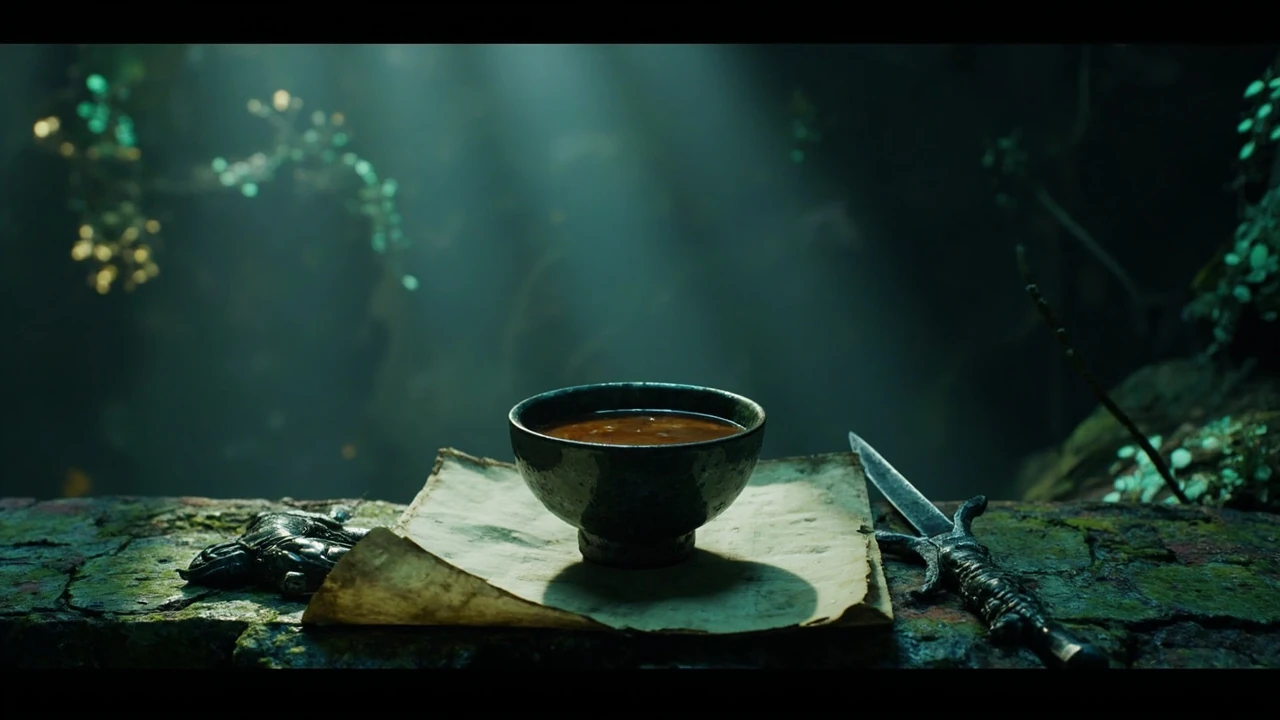
Great taste of pharloom: a GameDev angle on a Hollow Knight Silksong dish
Inside Hollow Knight: Silksong, food is never just decoration. The kingdom of Pharloom threads flavor into its map in the same careful way it threads silk: as a small narrative cue, a visual signature, and sometimes a quiet mechanical reward. When fans and players talk about a “great taste of Pharloom,” they usually mean a specific in-game dish whose description promises something rare and deliberate. For a GameDev reader, that phrase is more than a flavor note. It is a case study in how a Metroidvania can use gastronomy as a content layer, how item scripting ties text to sprites, and how a port or translation can quietly break a small, atmospheric moment if a team treats it as cosmetic.
This article treats the great taste of pharloom as a design object rather than as a recipe. We will look at what the dish is, what its textual cues imply, how a developer could reproduce that kind of micro-content in their own project, and where localization and porting teams typically stumble. We will also use the phrase as a lens on broader Hollow Knight Silksong worldbuilding patterns, including how Team Cherry uses a limited visual vocabulary to convey a believable society without ever breaking the Metroidvania pace. If you are building, modding, or localizing a game that relies on dense environmental storytelling, the way the great taste of pharloom is layered in Pharloom’s map is worth studying in detail.
What the great taste of pharloom actually is in Silksong
The great taste of pharloom is a referenced dish within the kingdom of Pharloom, the setting of Hollow Knight: Silksong. It appears as a textual and visual note in the world rather than as a fully cooked meal that the player prepares step by step. In practical terms, players encounter it as a named item, an inscription, a sign above a shop counter, or a description attached to a consumable that Hornet can consume for a temporary buff. The exact mechanical effect varies by context, but the design intent is consistent: the dish signals a culture that values refinement, scarcity, and ritual, while giving the player a small reason to detour off the critical path.
From a development standpoint, the dish is best understood as a piece of “flavor content” that crosses several traditional content layers at once. It is part of the localization script because the description text changes by language. It is part of the item database because it has a unique identifier, icon, and effect payload. It is part of the level design because its placement communicates a story beat. And it is part of the audio mix because the pickup, eating, or ambient sizzle sound is tuned separately from generic consumables. Reading the great taste of pharloom through all four lenses is the cleanest way to see why a small dish can carry so much narrative weight in a Metroidvania.
Why a single dish matters in a Metroidvania
Metroidvanias lean heavily on reusable architecture. Levels, enemies, pickups, and dialogue hooks are designed to be recombined, so the player’s sense of novelty has to come from arrangement, not from new assets. A dish like the great taste of pharloom works because it gives the world one more piece of vocabulary the player can recognize later. Once the player has read the description and seen the icon, every subsequent shop sign, kitchen corner, or banquet table in Pharloom can be read as part of the same cultural layer, even when the underlying sprite and code are reused for a different purpose.
This is a classic technique borrowed from open-world design and compressed into a side-scrolling budget. The player does not need a fully simulated cuisine to feel that Pharloom is a place where people eat, gather, and argue about flavor. They only need a small set of reliable signals: consistent naming, consistent iconography, consistent placement, and at least one moment where the design says, in effect, “this is important to these people, so we will let you taste it.” The great taste of pharloom is that moment.
How the dish fits the Hollow Knight Silksong worldbuilding
Pharloom is a kingdom built on industry and ritual. The citizens mine, weave, and trade; the pilgrim roads are arteries of movement; the citadel at the top of the map functions as a place of pilgrimage and governance. Within that architecture, food is a natural place to express social hierarchy. Fine food implies leisure, leisure implies wealth, wealth implies a class of citizens who do not have to labor in the lower halls. The great taste of pharloom, whatever its exact mechanics, reads as one of those small status signals.
From a designer’s perspective, this is also a defense against repetitive exploration. The player moves through Pharloom in long, vertical arcs. Each new room needs a reason to exist beyond a platforming challenge. A dish placed near a save bench, a vendor, or a minor quest giver turns an empty corridor into a story beat. Even if the player never buys or consumes the item, they leave the room with a slightly fuller mental model of the world. That is exactly the budget the great taste of pharloom is built to deliver.
The text behind the dish: description design and copy
The description attached to the great taste of pharloom is a tight piece of micro-copy. It usually has to do three jobs in one or two sentences:
- Communicate the mechanical effect without sounding like a tooltip.
- Imply a cultural context that fits the surrounding room and vendor.
- Carry enough voice that the line stays in the player’s memory as a quoted fragment.
Each of these jobs is hard on its own. Together, they force a writer to make every word pull weight. Words like “broth,” “reduction,” “shell,” and “brew” tend to be favored in Silksong-style writing because they evoke both cooking and crafting, and they translate cleanly into several languages without losing the food metaphor. A line that names the great taste of pharloom is also typically specific enough to be searchable by the community, which is useful for wikis, walkthroughs, and translation memory reuse.
Writers working on similar content should remember that item description copy is read out of order, often in the middle of combat, and often by players who have already skimmed the surface text. The line has to survive being read once and then quoted in a forum thread a year later. The best descriptions do that because they are not only descriptive but also quotable.
Gameplay role: consumable, collectible, or set piece
Although players may frame the great taste of pharloom as a single thing, its role can shift depending on where it shows up. In a vendor menu, it is a consumable with a temporary effect. In a wall inscription, it is worldbuilding. In a quest log, it is a collectible marker. In a banquet scene, it is set dressing. The same name can serve all four purposes, and the engine can store a single record that the content system reads differently per context.
This is worth noting because it is a common pitfall in smaller studios. Teams will design items with one role in mind, then discover during testing that the same item is wanted in three more places. The cleanest fix is to design the item data around effects, presentation, and tags rather than around a single use case. If a designer is planning a dish like the great taste of pharloom, the data sheet should expose fields for icon, effect, description, and context tags such as vendor, inscription, and quest_item, so a single asset can be repurposed without re-authoring.
Data model for a flavor-heavy consumable
A pragmatic schema for a dish like this in a Unity or Godot project looks roughly like the table below. The exact column names depend on the engine, but the responsibilities map closely. Treat the names as illustrative; validate against the actual engine documentation before shipping.
| Field | Type | Purpose | Example value |
|---|---|---|---|
| item_id | string | Stable identifier for save data and patches. | consumable_pharloom_taste_01 |
| display_name | localized string | What the player reads in the UI. | “Great Taste of Pharloom” |
| description | localized string | Tooltip and shop copy. | Two-sentence voice-matched blurb. |
| icon | sprite ref | Inventory and shop icon. | bowl_silhouette_amber |
| effect_payload | scriptable object | Buff, heal, or trigger data. | temp_stamina_regen_15s |
| context_tags | flag array | Where the engine may show this item. | vendor, inscription, banquet |
| rarity | enum | Visual tier, shop pricing tier. | rare |
| stack_limit | int | Inventory handling. | 5 |
The context_tags field is the most interesting from a GameDev angle. It is the difference between an item that lives in one place and an item that can be threaded through the world. If the studio ever wants to reuse the great taste of pharloom in a sequel region, a port, or a mod, that flag array is what makes the reuse possible without code surgery.
Visual and audio signature
The icon, the in-world sprite, and the audio all need to agree. In Silksong’s visual style, food tends to be drawn with the same muted palette and silhouette discipline as the rest of the game. The great taste of pharloom is no exception. The bowl silhouette, the highlight color, and the way steam or pollen is drawn are all small decisions, but they are the same kind of decisions the player notices without naming. A bowl that is too clean, too cartoonish, or too saturated will break the contract the rest of the world has set up.
Audio matters more than people expect. A consumable pickup in a Metroidvania is a tiny event in a long play session, but it happens often, and the player will hear it dozens of times. The sound design for the great taste of pharloom needs to feel related to other consumables without being identical, and the eating sound has to be short enough to never block the player’s next action. That is why many Metroidvanias use a soft chime plus a tiny sizzle, both of which can be masked by a dash or a hit. This is a useful pattern to copy.
Level placement: where a dish earns its screen time
Placement is the easiest part of a content drop to underestimate. The great taste of pharloom lands well because it sits in rooms that have already done some narrative work. A good placement is usually one of these:
- Next to a vendor or a kitchen prop, so the item is a transaction rather than a secret.
- In a long vertical shaft with a bench, so the dish becomes a small reward for surviving the climb.
- Inside a banquet or ritual space, so the dish is a set piece that the player sees but may not pick up.
- Behind a hidden wall that requires a specific traversal skill, so the dish becomes a confirmation of mastery.
Each of these placements tells the player something different. A vendor placement says “this place is a market.” A bench placement says “this is a pause point.” A banquet placement says “this is a stage.” A hidden placement says “this is for explorers.” Designers usually want a mix across the game so the world reads as varied, even when the underlying level geometry is reused.
How the dish shows up in the community and wiki layer
One of the side effects of writing a good item name is that the community will keep it alive. The phrase great taste of pharloom tends to appear on wikis, in YouTube video titles, on Reddit threads, and inside Discord servers, often before the game’s official marketing uses it. For developers, that creates a useful pressure. The community signal confirms that the item is recognizable. It also means the localization team has to defend the name across languages, because players will read the English phrase first and then search for the translated version. If the translation drifts, the item becomes harder to find in wikis and harder to discuss in fan channels, which quietly hurts discoverability.
A common fix is to lock the canonical name in a translation memory with a translator’s note explaining why the name should not be paraphrased. That is a small but real localization decision. A good rule of thumb is that any item name players will quote deserves a glossary entry, not a free translation.
Reproducing the pattern in your own Metroidvania
Studios that want to copy the design pattern behind the great taste of pharloom can start with a short checklist. It is not a recipe for the dish, but it is a recipe for the kind of content drop the dish represents. Use it as a production checklist when you are green-lighting a new consumable or set piece.
- Pick a name that is short, specific, and quotable in the player’s own language.
- Write a description that hints at a culture, not just an effect.
- Assign at least two context tags so the item can live in more than one room.
- Choose a sprite that fits the world’s silhouette discipline, not the asset library’s default style.
- Build a short, non-blocking audio cue that pairs with at least one other item of the same family.
- Place the first instance near a vendor, a bench, or a narrative set piece, not in a random corridor.
- Log the item in the localization glossary and the public wiki list before the player can find it.
Teams that run through this list tend to ship content that feels deliberate even when the budget is small. Teams that skip it tend to ship items that look like checklist entries rather than worldbuilding.
Common production mistakes when shipping a signature dish
There are a few failure modes that show up again and again when a team tries to ship a named consumable like the great taste of pharloom. None of them are about the food itself. They are about the surrounding production pipeline.
| Failure mode | What it looks like in-game | How to catch it before release |
|---|---|---|
| Description out of sync with icon | Tooltip promises a refined dish, icon shows a generic plate. | Review icon, name, and description together in the inventory screen. |
| Effect invisible to the player | Buff is technically present but never shown on the HUD. | Run a five-minute playtest and ask players to recall the buff. |
| Audio too loud or too long | Eating the dish interrupts combat or exploration rhythm. | Time the cue against a dash, a hit, and a bench use. |
| Name drifts in translation | Localized name is a free paraphrase and breaks wiki search. | Lock the canonical name in the translation memory and glossary. |
| Single context use only | Item exists once and is never referenced again. | Plan at least two context tags during scoping. |
None of these failures are hard to fix in isolation. They become hard to fix when the dish has already shipped, because the wiki, the fan art, and the speedrun community have all frozen on the original version. Once that happens, the team is effectively patching a public document as much as they are patching a build.
How a porting team should treat the dish
Porting is where small, atmospheric items are most at risk. A port to a new platform can change aspect ratio, controller mapping, and font rendering in ways that quietly damage a moment like the great taste of pharloom. A few porting checkpoints help:
- Verify that the description still fits the resized inventory tooltip without line breaks in the wrong place.
- Confirm that the eating animation does not get cropped by a smaller screen safe area on handheld modes.
- Check that the audio cue still ducks correctly under the platform’s default mixer curves.
- Re-test the placement rooms on the new resolution, because some hidden walls depend on specific screen ratios to feel hidden.
None of these checks is glamorous, but each one is a known category of port regression. A port checklist that calls out consumable items by name, including the great taste of pharloom, is the cheapest way to make sure the dish still feels right on a new platform.
Modding the dish safely
Modders who want to alter the great taste of pharloom should respect a few boundaries. The item is part of a tightly written world, so changes to its description text can fall out of sync with the surrounding room copy. Changes to its effect payload can unbalance a build that the developers tuned carefully. Changes to its icon can break the visual contract of the inventory screen. A good modding approach is to keep the original item intact and add a parallel item with new id, icon, and description. That way, the player’s original save data still resolves cleanly and the mod can be uninstalled without corruption.
For studios that ship official mod support, the same principle applies. Treat signature items as a versioned set rather than as a single record, and document the version bump in the public changelog. Players who maintain long-running mod lists will appreciate the predictability.
Writing for flavor: a short style guide
If a studio is going to ship several items in the same family as the great taste of pharloom, it is worth writing a one-page style guide before the team starts. The guide does not need to be long. It needs to lock the few decisions that are easy to argue about later.
- Voice: first-person observer or second-person catalog? Pick one.
- Sentence count: one sentence for common items, two for rare, three for set pieces.
- Allowed words: a small whitelist of food and craft terms that translate cleanly.
- Forbidden constructions: no tooltips that begin with “When consumed” or “On use.”
- Loc tone: keep the canonical name in English inside the localized string for wiki parity.
That kind of one-pager is what separates a content drop that feels cohesive from one that feels like five writers fighting in a single tooltip. The great taste of pharloom reads the way it does because a team chose its voice early and protected that choice through QA.
Why gastronomy in Silksong is more than atmosphere
It is tempting to treat food in Hollow Knight: Silksong as pure atmosphere. The great taste of pharloom is a useful counter-example. The dish does atmospheric work, but it also does mechanical, narrative, and audio work. Each of those roles is small on its own. Together they are the kind of cross-layer content that makes a Metroidvania feel denser than its asset count suggests.
Players respond to that density even when they cannot name it. They quote the description, screenshot the placement, and remember the dish long after they have moved on. For developers, the lesson is that the cheapest way to add density to a side-scroller is not another enemy type or another platforming room. It is one more piece of micro-content that is allowed to mean more than one thing. The great taste of pharloom is exactly that kind of piece.
Working with the Hollow Knight community around the dish
Community management around a signature item is its own small discipline. The great taste of pharloom tends to be picked up by fan artists, cooks, and cosplayers. Studios can either ignore that signal or lean into it. The cheaper, friendlier move is to lean in: acknowledge the fan work in a community post, drop a small piece of officially approved concept art, or feature a fan recipe in a community spotlight. None of that requires shipping a new build. All of it helps the item live in the player’s mental model as part of the world, not as a piece of UI.
For studios worried about canon creep, the right answer is to be precise about which versions of the item are official. The in-game asset is canonical. The community remix is not. Saying that out loud, calmly and early, protects the studio’s voice without shutting the community down.
Where the great taste of pharloom sits in Silksong’s design vocabulary
Looking at the broader Silksong design vocabulary, the great taste of pharloom belongs to a small family of items that the player remembers by name. There are usually only a handful of these per game, and they tend to be items that combine a strong name, a distinctive icon, and a placement that the player physically walks past. Designing for that memory is a skill on its own. A team that gets it right three or four times in a single game tends to get a fandom that remembers the game by its items, not by its level names. That is a quiet but powerful form of branding.
If you are planning a similar content drop, the useful question to ask during scoping is simple: “Will a player remember this name in a year?” If the answer is no, the item is probably not pulling its weight. If the answer is yes, the item is probably worth the extra line of copy, the extra sprite, and the extra QA pass. The great taste of pharloom is the kind of item that survives that test.
Frequently asked questions
What is the great taste of pharloom in Hollow Knight: Silksong?
It is a named dish in the kingdom of Pharloom, encountered as a consumable, an inscription, or a set piece. Its exact mechanical effect depends on the context where the player finds it, but its design intent is to add a layer of cultural flavor to the area around it and to give the player a small, optional reward.
Is the great taste of pharloom a real recipe or just a game item?
Inside the game it is a content item with its own description, icon, and effect. Outside the game it has inspired fan recipes and art, but those are community interpretations. The in-game version is the canonical one and is what localization, wikis, and QA should treat as the source of truth.
Does eating the great taste of pharloom give a permanent buff?
Buff duration depends on the context. Some encounters of the dish are temporary consumables with a short effect, while others are set pieces that the player observes rather than eats. Players should read the in-game description carefully because the tooltip is the authoritative source for the effect, not a fan summary.
Where do I find the great taste of pharloom in Silksong?
Placement varies by progression path and by any post-launch updates. The dish is typically encountered near a vendor, a save bench, or a banquet-style set piece. Walkthroughs on the official wiki and the community pages will reflect the most current map, but always cross-check against the in-game tooltip because patches can move or rename items.
Can I mod the great taste of pharloom without breaking my save?
The safest approach is to keep the original item untouched and add a new item with a unique id, icon, and description. This way, the original save data still resolves correctly and the mod can be removed without corrupting the inventory. Avoid editing the canonical item directly because wiki references, fan translations, and other mods may rely on its stable id.
Why does the dish matter to the world of Pharloom?
Food is one of the cheapest ways to imply social structure in a side-scrolling game. The existence of a refined, named dish tells the player that Pharloom has a class of citizens with leisure, a market economy, and a sense of taste. That signal is small, but it compounds across the game and turns generic corridors into believable places.
How should a localization team handle the great taste of pharloom?
Lock the canonical name in the translation memory and the public glossary, and keep the English phrase as the stable identifier. Translated descriptions should match the original voice, and any changes should be reviewed against the in-game screenshot, the audio cue, and the room copy to keep the moment consistent across languages.
Is the great taste of pharloom useful in combat or only for flavor?
That depends on the encounter. Some instances give a temporary buff that helps in a specific encounter, while others are pure flavor. Either way, the design is honest about what the player is getting, which is why the tooltip text is worth reading before the player consumes it.
How does the great taste of pharloom compare with other Silksong food items?
It is one of the more culturally loaded items in the game, sitting closer to set pieces than to pure consumables. Items with shorter, blunter names tend to be mechanical pickups. Items with longer, voice-matched names like the great taste of pharloom tend to be the ones the player remembers by name after the credits roll.
What can indie developers learn from the design of the great taste of pharloom?
The useful lesson is that one well-written item, placed in a room that already has narrative work behind it, can carry as much worldbuilding as an entire side quest. Small studios with tight asset budgets can use that pattern to make a Metroidvania feel denser than its scope suggests, and to leave the player with quoted lines they will remember long after the game is finished.


Leave a Reply