
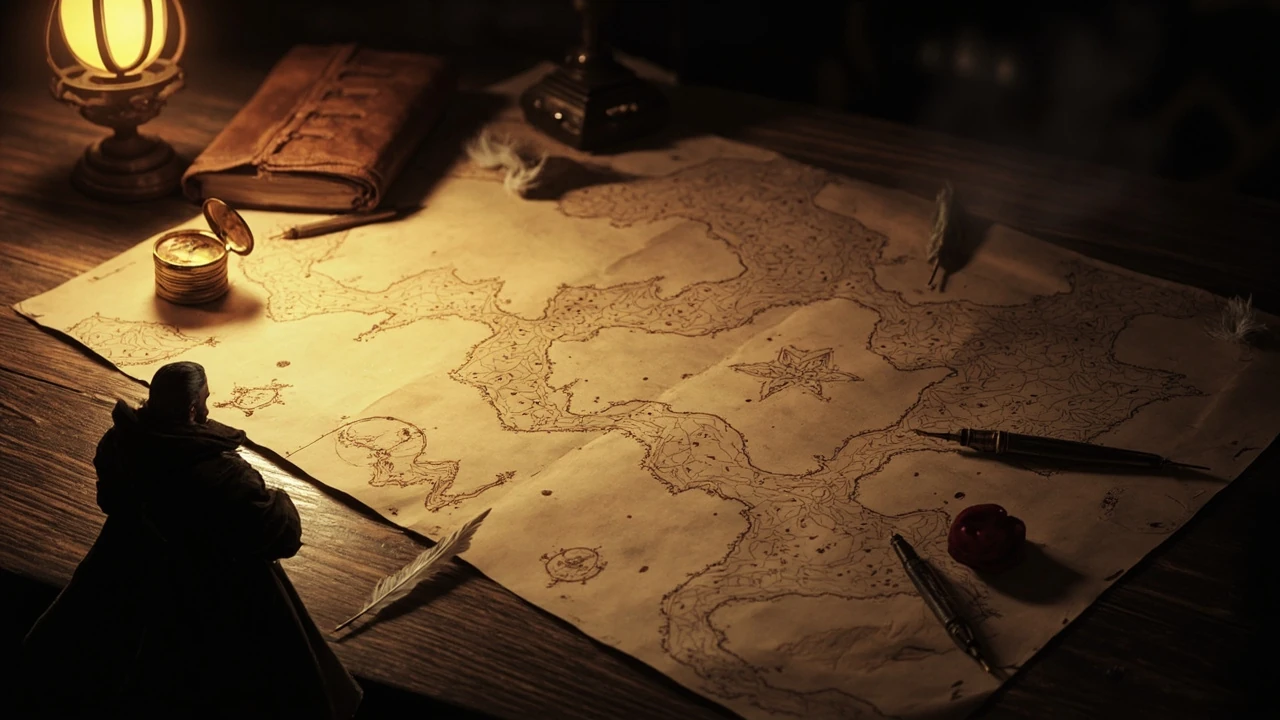
Clair Obscur Expedition 33 walkthrough: a developer-side map of the campaign
Clair Obscur: Expedition 33 is a turn-based fantasy RPG from Sandfall Interactive, and the early chapters ask players to balance exploration, combat resource management, and a steady stream of optional side content. The verified guide from IGN frames the campaign as a linear main story that still rewards returning to earlier areas for missing collectibles, side quests, and unlockable combat tools such as Pictos, Paint Cages, and weapons.
For players, the practical question is how to keep momentum without missing the side content that the campaign sprinkles between story beats. For developers reading the same campaign as a design reference, the same question reframes itself: how does a mid-size team structure pacing, optional systems, and recovery loops so that a long turn-based RPG stays readable for a casual player and rewarding for a completionist? This page is a developer-side map of the Clair Obscur Expedition 33 walkthrough, written to help both audiences keep their place in the campaign and read the design choices that hold it together.
Who this walkthrough is for
The article assumes a reader who has either just started Chapter 1 of the campaign or who is returning to an earlier area to clean up side content. The pacing notes double as a short design commentary for small-studio developers who want to study how a long turn-based RPG can stay navigable without a procedural map or a fast-travel web. Game designers and narrative designers will find the section on optional content useful as a structural reference, while players can treat the chapter-by-chapter flow as a checklist for not missing the systems that quietly shape the rest of the run.
How the Expedition 33 campaign is structured
The Clair Obscur Expedition 33 walkthrough is built around a linear main story that the developer punctuated with clearly signposted gaps. According to the verified guide, the campaign covers the full main story and is paired with a separate walkthrough index that points players toward Pictos, Paint Cages, weapons, and side quests they may have missed on the first pass.
For developers, the takeaway is that the studio treats side content as part of the campaign’s spine, not as a parallel mode. Each major area has a story beat, a combat escalation, and a recovery loop that lets the player return to fill out the optional systems. That three-part rhythm is a useful pattern for any small team trying to ship a long RPG without sprawling into an open world.
Linear story, layered side content
The main Expedition 33 Walkthrough Index is described as a sequence of areas, with explicit advice on what to do in between. The pattern is consistent enough to summarize as a repeating structure rather than as a checklist of map markers. For player readability, the studio has chosen to keep the story line obvious and put the side content off the critical path but never out of reach.
- A story-critical waypoint that pushes the player forward.
- An optional cluster of encounters or NPCs that unlocks side content nearby.
- A soft save or upgrade opportunity before the next difficulty spike.
- One or more repeatable tasks, such as a hunt or a Pictos hunt, that the player can return to later.
This pattern keeps the route from feeling like a corridor and keeps the side content from fragmenting the pacing. It is also a useful counterpoint to open-world design, because it asks the player to manage optionality without forcing them to choose between exploration and momentum.
Preparing for the first chapter of Expedition 33
Before diving into the chapter-by-chapter flow, a small amount of preparation saves a lot of backtracking. The verified guide emphasizes that the main story alone is only part of what the campaign offers, so players who plan to do any side content at all benefit from a short mental list of what they are willing to leave undone and what they want to come back for.
| Preparation step | Why it matters | What to track |
|---|---|---|
| Skim the current area’s optional markers | Prevents missing a Pictos or quest trigger that gates later content | NPC names, side quest titles, environmental cues |
| Note the current party and equipment loadout | Turn-based combat scales quickly across chapters | Active party, equipped Pictos, current weapons |
| Identify the nearest soft save or upgrade point | Reduces recovery time after a failed encounter | Saves, campfires, merchants, upgrade NPCs |
| Decide whether to clear side content now or later | Forces a clear intent, which avoids lost progress at the chapter break | A short written or mental checklist |
For developers, the table doubles as a design checklist for a tutorial-adjacent UI. If the game surfaces these four pieces of information at every chapter transition, the player does not need a third-party walkthrough at all. The fact that the studio’s index still requires outside reference is a useful reminder that even a well-paced RPG benefits from a small amount of explicit scaffolding at the seams between chapters.
Chapter flow: a developer’s reading of the campaign
The verified guide confirms that Expedition 33 has a full main-story walkthrough, but does not enumerate every chapter transition. The notes below describe the structural shape that the guide implies, not a claim that the game ships a specific number of named chapters. Players should treat the chapter list as a pacing reference, and developers can read it as a template for designing a long turn-based RPG with side content woven through the story.
Chapter 1: establishing the loop
The opening chapter exists to teach the combat system, introduce the expedition’s premise, and give the player a small space to experiment. The first combat encounters are easy enough to finish without leaning on Pictos or special abilities, which lets the studio teach mechanics without overwhelming the player. The optional content in this chapter is short and visually marked, which doubles as a tutorial for how optionality will work later in the game.
For a small studio, this is the most reusable piece of the campaign’s design. A short, low-stakes first chapter is the cheapest way to teach combat, exploration, and resource management at the same time. The lesson is that the optional content in a tutorial chapter is not filler. It is the player’s first chance to practice the rhythm they will use for the rest of the game.
Chapter 2 onward: the repeating story, side content, and recovery pattern
After the opening, the campaign settles into the repeating pattern the studio uses for the rest of the run. Each area introduces a new visual theme, a new enemy archetype, and at least one optional cluster of side content. The main story beats are short enough that the player never feels locked in, but the side content is dense enough that returning to an area is worth the trip.
- Story beat: a scripted encounter that pushes the main quest forward.
- Side cluster: NPCs, hunts, or secrets that unlock Pictos, weapons, or quests.
- Recovery point: a save, merchant, or upgrade opportunity that resets the player’s resources.
- Return hook: a reason to come back, such as a timed encounter or a new quest unlocked later.
This is the structural backbone that a Clair Obscur Expedition 33 walkthrough has to capture. The main story is the thread, but the side content is what gives the campaign its weight. A walkthrough that only tracks the story beat is a roadmap, not a guide.
Reading the combat system as a developer
For additional context, Combat in Expedition 33 is turn-based, which means the studio can lean on system clarity rather than reaction time. The verified guide frames combat as a system that the player can prepare for between encounters, with Pictos and weapons acting as the persistent tools that shape each fight. For a developer, the takeaway is that turn-based RPGs still need a small amount of system depth in order to justify a long campaign, and that depth has to be readable at a glance.
| System | Player-facing role | Developer-side implication |
|---|---|---|
| Pictos | Persistent passives that shape how a character plays | Functions as a low-cost progression layer that does not require level-grinding |
| Paint Cage | Combat effect that adds a new rule to a fight | Functions as a way to teach system depth without changing the core action economy |
| Weapons | Stat profile and sometimes a small passive or ability | Functions as a controlled upgrade vector that avoids overpowering the player |
| Side quests | Optional content with narrative and combat rewards | Functions as a delivery mechanism for Pictos and weapons outside the main story |
For a small team, the lesson is that you can ship a long turn-based RPG with a small number of interlocking systems, as long as each system has a clear role. The player does not need a deep ability tree to feel progression. A handful of persistent tools, a small library of combat effects, and a steady drip of optional content can carry a thirty-hour campaign without bloating the UI.
Side content, missables, and the walkthrough index
The verified guide explicitly calls out a walkthrough index with advice on what to do between areas, which is the studio’s way of acknowledging that some content is easy to miss. For players, the practical advice is to keep a short list as they go, because the index cannot capture every trigger condition. For developers, the lesson is that a long RPG benefits from a recovery loop: a way for the player to come back to a chapter without feeling like they failed the first time through.
How to use the walkthrough index without over-relying on it
The walkthrough index works best as a checklist, not a script. The player can use it to identify which areas still have unresolved optional content, then go back and resolve it on their own terms. A useful mental model is to treat the index as a table of contents for the campaign’s optional layer.
- Note the area name as you finish it for the first time.
- Mark any side content that you intentionally skipped.
- Mark any side content that you want to come back for later.
- Use the index only to check whether an area still has unresolved content.
This is also a useful design pattern for the studio. If the game surfaces a simple “completed / partial / untouched” state for each area, the player can self-direct without needing a guide. The fact that the studio still publishes a separate index is a hint that this kind of surface is easy to underestimate in development.
Common missables and how to recover them
Long RPGs almost always include at least a few missables. The verified guide does not enumerate them, so the safe approach is to treat any optional cluster as potentially gated. If an NPC or quest trigger is not in the right state when the player returns to an area, the studio can quietly close the content. Players who want to minimize the risk can build a habit of finishing the optional content in the area they are currently in, rather than leaving it for a clean-up pass.
For developers, the design lesson is that missables are not free. They cost the player progress, and they cost the studio goodwill if the player feels tricked. A small amount of explicit “this content will close after the next story beat” messaging is usually cheaper than the support cost of a confused player.
Reading the campaign as a small-studio reference
Expedition 33 is a useful case study for small studios shipping a long single-player RPG without the budget of a flagship series. The campaign leans on a small number of interlocking systems, a steady side-content drip, and a recovery loop that lets the player return to earlier areas. The player experience is shaped as much by what is optional as by what is required, which is a useful reminder that pacing is a design problem, not a content-length problem.
A simple way to read the campaign is to ask three questions at each chapter transition. Does the player have a clear next story beat? Is there an obvious optional cluster that they can choose to engage with? Is there a recovery point that resets their resources before the next difficulty spike? If the answer to all three is yes, the chapter is doing its job. If any of them is no, the pacing will start to feel off, and a walkthrough starts to feel like a crutch rather than a reference.
Why the side content matters for pacing
Side content is the cheapest tool a small studio has for controlling pacing. Adding a Pictos hunt or a side quest to an area gives the player a reason to spend an extra thirty minutes there, which softens the transition into the next story beat. The studio does not have to ship more main story to slow the campaign down, and the player gets a small sense of control over how they spend their time.
For a team that is worried about campaign length, this is the single most useful pattern to borrow. A few well-placed optional clusters will do more for pacing than an extra hour of cutscenes, and they give the player something to come back to without making the main story feel padded.
Why the recovery loop matters for player trust
A long RPG also needs a recovery loop. The player has to be able to come back to an area, fix a missable, or chase a reward that they skipped, without feeling like the game is punishing them for playing it the first time. The walkthrough index is the studio’s public-facing recovery loop. The in-game equivalent is a small set of clear signals that an area still has unresolved content.
For small studios, the lesson is that recovery loops are part of the core design, not a feature to bolt on after launch. If the player cannot tell whether an area is clean, they will either play too cautiously or miss content that they actually wanted. A small UI surface for “area progress” is a cheap fix for a problem that would otherwise require a guide.
Checklist: keeping your Expedition 33 run on track
The following checklist is a short version of the campaign’s pacing, written for a player who wants to keep momentum without missing optional content. Developers can also use it as a pacing template for a long turn-based RPG.
- Finish the opening chapter before optimizing party or equipment loadouts.
- Treat each area’s optional cluster as a choice, not an obligation.
- Note the recovery point in each area before the next story beat.
- Use the walkthrough index only to check for unresolved content, not as a script.
- Return to earlier areas only when the index or the game surfaces a reason to.
- Decide early how much side content you want to do, and stick to it.
The list is short on purpose. A long RPG does not need a long checklist to stay navigable. It needs a small set of habits that the player can repeat every chapter. The Clair Obscur Expedition 33 walkthrough is most useful when it supports those habits, not when it replaces them.
Limitations of this walkthrough
The verified guide does not enumerate every chapter transition, optional cluster, or missable in the campaign. This page is therefore a structural map and a developer-side reading, not a step-by-step route. Players who need a fully verified, area-by-area route should treat the official walkthrough index as the primary source and use this page as a pacing reference. Developers who want a deeper design case study should pair the campaign with a play-through, since structural notes cannot replace direct observation.
If a future patch changes the pacing, the optional content layout, or the recovery loop, this page will need to be updated against the new build. Until then, the safest assumption is that the studio is iterating on the campaign’s seams, which is exactly where a long turn-based RPG is most likely to drift.
Frequently asked questions
What is the Clair Obscur Expedition 33 walkthrough covering?
The walkthrough covers the full main story of the campaign and is paired with a separate walkthrough index that points players toward Pictos, Paint Cages, weapons, and side quests they may have missed between areas. It is the studio’s primary reference for the main route and the optional layer around it.
Is Clair Obscur Expedition 33 a turn-based RPG?
Yes. Clair Obscur: Expedition 33 is a turn-based fantasy RPG from Sandfall Interactive. The combat system is structured around persistent tools such as Pictos and weapons, which the player can prepare between encounters rather than during them.
Do I need to do every side quest in Expedition 33?
No. The campaign is built so that the main story is the spine and the side content is optional. Players who want to finish the story quickly can skip most side content, and players who want the full picture can return to earlier areas using the walkthrough index. The studio has structured the optional layer so that it does not block the main route.
What are Pictos in Clair Obscur Expedition 33?
Pictos are persistent passives that shape how a character plays in combat. The verified guide lists them as one of the major collections alongside Paint Cages and weapons, which means they are part of the campaign’s core progression loop rather than a hidden extra. The walkthrough index is designed to help players find the Pictos they missed.
How long does the Clair Obscur Expedition 33 campaign take to finish?
The verified guide does not give a specific completion time. For most long turn-based RPGs, total play time depends heavily on how much optional content the player does and how much time they spend optimizing combat. A reasonable working assumption is to budget for the main story first, then decide how much side content to add on top.
Can I return to earlier areas in Expedition 33 after the story moves on?
Yes. The walkthrough index is built around the assumption that players will return to earlier areas to clean up side content. The studio has signposted the optional clusters clearly enough that returning to an area is a normal part of the campaign, not a punishment for skipping content the first time through.
What is the developer-side lesson from Expedition 33’s pacing?
The clearest lesson is that a long turn-based RPG can stay readable with a small number of interlocking systems and a steady drip of optional content. The studio does not rely on a sprawling open world or a fast-travel web to keep the campaign navigable. It relies on a repeating pattern of story, side content, and recovery, which is a useful template for any small team shipping a single-player RPG.
Is the walkthrough index useful for completionist players?
Yes. The index is built to help players who want to find every Pictos, Paint Cage, and weapon, and it includes advice on what to do between areas. Completionist players can use it as a checklist to confirm that an area is fully resolved before moving on.
What should I track while playing through Expedition 33?
A short written or mental list of the area name, the optional clusters you skipped, and the recovery points you used is usually enough. The walkthrough index is then used to confirm whether an area still has unresolved content, rather than as a continuous reference.
Where can I read the official walkthrough for Clair Obscur Expedition 33?
The verified walkthrough is published by IGN, and the main story walkthrough is paired with a walkthrough index that points players toward the optional content. Players who want a developer-side reading of the campaign can use this page alongside the official guide.

Leave a Reply