
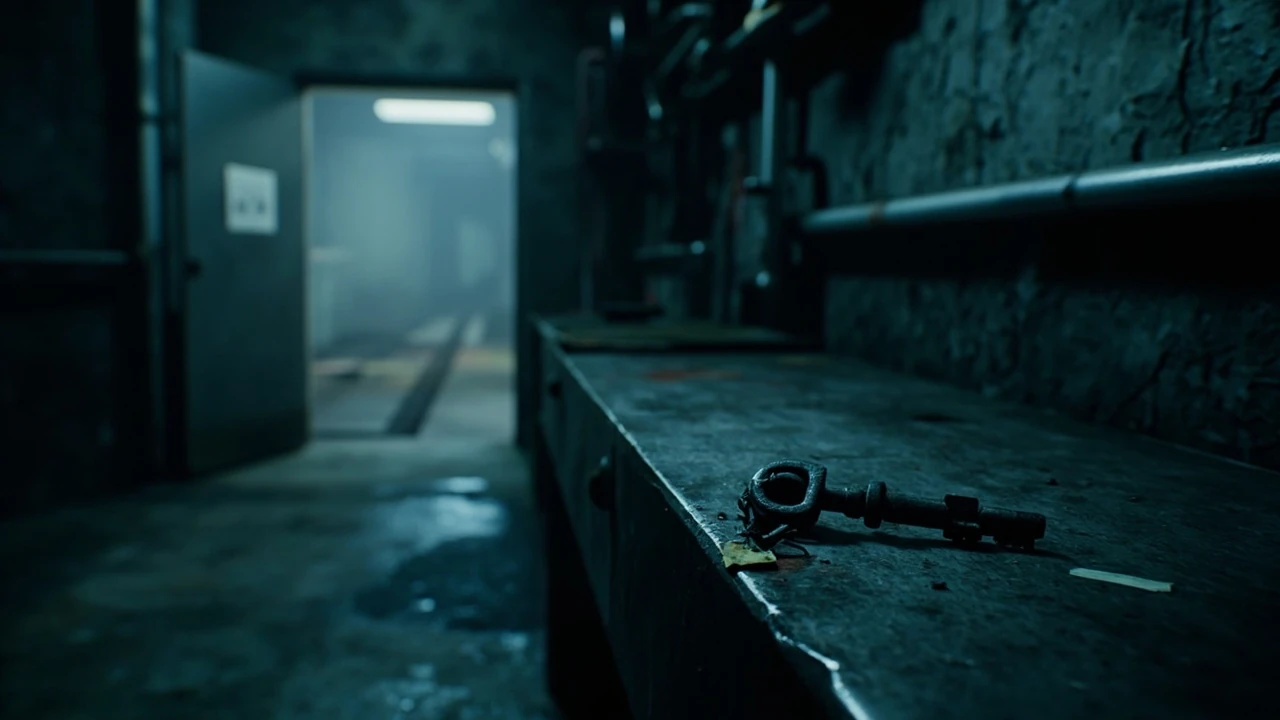
Dam surveillance key in ARC Raiders: what it is and why it matters
The dam surveillance key in ARC Raiders is a small, single-use inventory item that opens one specific locked door in the Water Treatment complex on the Dam Battlegrounds map. Raiders who carry it can reach a surveillance room on the first floor, on the south side of the Water Treatment buildings, an area that is otherwise sealed during a normal match. The key is not a weapon, mod, or crafting material, so it lives in the consumables row of the backpack and does not take up a weapon slot. It exists to give players a reason to deviate from the main loot loop, to chain two of the map’s verbs together, and to create a small but memorable moment when the door finally swings open.
For a developer or technical designer reading the design, the key is a useful case study in how extraction shooters keep their maps dense without overloading the player. The Water Treatment area already has ambient cover fights, rooftop sightlines, and a few standard room spawns. Adding a key-locked room on top of that gives the zone a second, optional layer of meaning. A team that lands there without the key can still extract and progress, while a team that has the key gets a small information advantage and a defined objective. The mechanic is also a working example of how a quest can be used to teach the map, rather than simply rewarding the player for ignoring it.
How the dam surveillance key is obtained
There are two documented paths to the dam surveillance key, and both fit cleanly into a normal Dam Battlegrounds run. The first is scavenging. The key is treated as a world spawn, which means it can appear in the same containers, desks, shelves, and dead-drop pouches that produce other single-use keys and consumables across the map. Because it is rare, the practical advice is to check the usual extraction-shooter hotspots: the top of crates in maintenance rooms, the desks inside the Water Treatment control offices, the small side rooms that branch off the main pipe halls, and any container that the game visually flags as a possible key spot. Expect to see it in the same places where players normally find bunker keys, control room keys, and other map-specific access items.
The second path is quest-driven, through a mission called Greasing Her Palms. This is a named contact quest that, at completion, rewards the dam surveillance key directly. For players who would rather not depend on RNG, completing the quest and then heading to the Water Treatment area is the most reliable route. For developers, this is the more interesting path because it shows how a key can be placed in two parallel economies at once: the random container economy, which is good for emergent moments, and the quest economy, which is good for guided moments.
- Scavenge containers, desks, shelves, and side rooms around the Dam Battlegrounds map, with extra attention to the Water Treatment control offices and the pipe-lined maintenance corridors.
- Complete the Greasing Her Palms quest through the appropriate contact, which rewards the dam surveillance key on completion.
- Play in squads, because the key is a single-use item: only the player who actually interacts with the locked door consumes it, and a teammate carrying a copy can save a run if the holder is eliminated.
- Plan an extraction route before entering the surveillance room, because the south side of Water Treatment sits close to several common extraction paths and is often contested.
Where the key is used: the Water Treatment surveillance room
The dam surveillance key is consumed when a player interacts with the locked door on the first floor, on the south side of the Water Treatment buildings. Inside is a surveillance room, which the broader community treats as a small but information-rich space. In practical terms, the room is worth entering because it offers a defined piece of map intel, a few additional containers to loot, and a defensible interior position during a fight. None of those rewards are exotic on their own; the value comes from being able to reach them on demand, rather than waiting for the room to be open by accident.
From a level design point of view, this is a textbook “key plus soft landmark” pattern. The Water Treatment complex is already a recognizable silhouette on the map, with a clear roofline and a strong vertical profile. Putting a locked room on the south side of the first floor, rather than in a deep basement or an unmarked annex, means that a player can plan the approach from the minimap. They can see which team is contesting the door, decide whether to wait, push, or rotate, and use the building’s existing cover layout to stage the engagement. The key does not have to teach the player where to go; the architecture already does that.
Quest design lessons from Greasing Her Palms
Greasing Her Palms is a useful case study in how a single key can carry a small arc of design. The quest uses a named contact, an in-fiction task, and a tangible reward that the player is meant to use immediately. That is a tight loop. The contact gives the player a reason to engage with the dialog system, the task pushes them back into the world, and the reward is something they can spend in the same session, often in the same match, rather than a generic currency that will sit in the stash for weeks.
For developers thinking about their own progression systems, a few details stand out. The reward is contextual, so it feels earned even when the underlying task is short. The key targets a specific room, so the player can see the connection between the quest and the world. The key is also reusable across multiple matches, because the same room exists on every fresh instance of the Dam Battlegrounds. That combination of “narrative” and “system” reward is what makes the item feel more meaningful than a pure loot drop. If you are building a similar quest, the lesson is to keep the reward tied to a place the player can name, not to an abstract stat or a generic crate.
How the key changes the loop in a real run
Without the key, a typical Water Treatment visit is about cover fights, quick looting, and moving on. With the key, the same visit gains a defined objective and a small information payoff, which changes how a squad plans the early game. A team that knows one of their players has the dam surveillance key can route through Water Treatment on the way to a primary objective, spend thirty seconds clearing the south side, unlock the surveillance room, and leave with a small intel advantage and a defensible fallback position. A team without the key has to decide whether to contest the door anyway, which is rarely worth the cost in ammo and healing items, or simply ignore the room and focus on the rest of the map.
| Approach | Goal | Risk profile | Best when |
|---|---|---|---|
| Quest route (Greasing Her Palms) | Reliable, guided access to the surveillance room | Low to medium; the quest itself determines the early route | The squad values the surveillance room more than raw loot and wants predictable access to it |
| Scavenge route | Emergent access during a normal match | Medium to high; depends on where the key spawns and who else is nearby | The squad is already running a flexible route through the Dam Battlegrounds and is comfortable checking extra containers |
| Contest route (no key) | Deny other teams access to the surveillance room | High; the door still has to be cleared even though the reward is smaller | The squad has strong map control around Water Treatment and wants to lock other teams out of the room |
| Skip route | Treat Water Treatment as a normal loot area | Low; trade the surveillance room for faster rotations elsewhere | The squad’s main objective is a different compound or extraction and the surveillance intel is not worth the detour |
The table is not a ranking. Each approach answers a different question. The quest route is the right answer when the surveillance room is the run’s main goal. The scavenge route is the right answer when the squad already plans to be near Water Treatment. The contest route is the right answer when the squad controls the area and wants to deny the room. The skip route is the right answer when the squad has a better opportunity elsewhere. The For additional context, key works precisely because it does not force one of these choices on the player.
Design trade-offs behind a single-use key in an extraction shooter
Single-use keys are a deliberate trade-off. On the player-facing side, they create small, memorable moments: the door opens, the player sees a defined room, and the item is spent. On the systems side, they are cheap to implement, easy to balance, and do not require long-term inventory pressure. A key does not have a crafting chain, a mod slot, or a market value that needs to be tuned against the rest of the loot table. It exists, it is used, and it is gone. That simplicity is part of why the pattern is so common in extraction games.
The cost of that simplicity is information design. The game has to teach the player that the key exists, that it is bound to a specific door, and that the door sits on the south side of the Water Treatment buildings. ARC Raiders handles that with a combination of three channels: the quest Greasing Her Palms, the container spawn pool, and the visual identity of the surveillance room itself, which reads as a locked, separate space even before the player knows the key. For a developer working on a similar system, the lesson is that a single-use key only feels rewarding when at least two of those three channels are present. A key that is only obtainable through RNG feels random. A key that is only obtainable through a quest feels mandatory. A key that is obtainable through both, and is tied to a room the player can recognize on sight, feels like a natural part of the map.
Common mistakes when planning a run around the key
Most failures with the dam surveillance key are not about the item itself; they are about how the squad plans around it. A few patterns show up often enough to be worth naming.
- Carrying the key into a fight that has nothing to do with Water Treatment. The key is only useful at one door, so spending it in a side room or losing it to a third party is a pure loss. If the squad is far from the south side of Water Treatment, the key is just inventory weight.
- Entering the surveillance room without an extraction plan. The south side of Water Treatment is a known rotation point. Opening the door turns a quiet approach into a loud one, and a squad that lingers inside will often be pushed by a team that heard the interaction.
- Treating the quest reward as a guaranteed drop. Quest rewards in extraction games are usually reliable, but they are still subject to the same match rules as the rest of the session. Plan for the case where the quest is not active or the reward is delayed.
- Splitting the key across two players. Only the player who interacts with the door actually consumes the key, so a copy held by a teammate is a useful backup. Splitting it across two unrelated players, neither of whom is heading to the door, is wasted planning.
How the surveillance room fits into the broader Dam Battlegrounds layout
The Water Treatment area is one of several named complexes on the Dam Battlegrounds map, and the surveillance room is a small but specific corner of it. From a level design perspective, the room does three things at once. It adds vertical interest, because the first-floor placement means that the player has to commit to climbing into the building rather than simply peeking through a window. It adds a second objective inside a compound that already has one, which gives a team a reason to clear the same building twice. It adds a soft landmark, because the south-side door is the kind of architectural feature that players remember from one match to the next and start planning around.
For developers, that combination is the real reason the key is interesting. A single-use item is easy to add to a loot table. A locked room is easy to add to a level. The work is in making the two things reinforce each other, so that the player feels that the key was worth picking up and the room was worth building. The dam surveillance key in ARC Raiders is a small example, but it follows the same pattern that good extraction-shooter design uses everywhere: a defined place, a defined item, and a clear connection between them.
Production and balancing notes for a similar system
If you are implementing a comparable key-and-room pattern in your own project, the dam surveillance key is a useful reference because it is small enough to reason about end to end. A few production and balancing details tend to matter.
| Design area | Question to resolve | Practical answer for this kind of system |
|---|---|---|
| Drop source | Should the key be a pure world spawn, a pure quest reward, or both? | Support both. World spawns keep the item visible to players who skip the quest, and the quest gives the team a reliable path during balancing passes. |
| Drop weight | How rare should the key feel? | Rarer than common consumables so that the room feels special, but common enough that a focused player can expect to see one across a few sessions. |
| Quest integration | How does the quest teach the map? | Stage the quest steps near the door’s region so the player practices the approach before being rewarded with the key. |
| Door placement | Where on the building should the locked door sit? | Pick a side that has existing cover and a clear route from the player’s usual path, so the room is reachable without breaking the normal loop. |
| Reward inside the room | What does the player get for opening the door? | Combine a small intel reward, a few extra containers, and a defensible interior position, so the room is useful even when the loot is not exceptional. |
| Failure handling | What happens if the key is lost or wasted? | Keep the key farmable through both the quest and scavenging, so a wasted key is annoying but not run-ending. |
| Telemetry | How do you know the system is working? | Track how often the door is opened, how often the key is consumed on a different object by mistake, and how often players approach the door without the key. |
None of these answers are unique to ARC Raiders. They are the same questions any extraction-shooter team has to answer for any single-use key, and the dam surveillance key is a clean example because the scope is small. If the answers hold up for a single locked door in a single building, they will hold up for the larger key systems that sit on top of the same map.
How players and developers describe the same item differently
It is worth pausing on the gap between how players and developers tend to talk about the dam surveillance key. Players usually describe it in terms of behavior: where it spawns, which door it opens, which quest rewards it, and whether it is worth picking up in a given match. Developers usually describe it in terms of structure: an item slot in the inventory, a door flag on the building, a quest reward entry in the contact table, and a small piece of progression that connects the quest system to the world geometry.
Both descriptions are correct. The interesting design work is in the overlap. A key that players describe as “worth picking up” is usually a key that developers can describe in terms of three or four clear data structures, and the dam surveillance key fits that pattern. The player’s mental model of “open this door, get this reward” maps cleanly onto the developer’s mental model of “a flag on the inventory item, a flag on the door, a quest step, a reward entry.” Keeping that mapping tight is what makes the item feel honest. A key that the player cannot describe in a sentence is usually a key whose data is doing too much.
Frequently asked questions
What does the dam surveillance key do in ARC Raiders?
The dam surveillance key opens a locked door that leads to a surveillance room on the first floor, on the south side of the Water Treatment buildings in the Dam Battlegrounds map. It is a single-use consumable, so it is spent when the door is opened.
Where do I find the dam surveillance key?
You can find it by scavenging containers, desks, shelves, and side rooms around the Dam Battlegrounds map, or by completing the Greasing Her Palms quest, which rewards the key directly.
Is the dam surveillance key a quest reward?
Yes. Greasing Her Palms is the quest that grants the dam surveillance key on completion. The same key can also appear as a world drop, so players who have not started the quest can still find one through normal looting.
Do I need a squad to use the dam surveillance key?
No. A solo player can carry and use the key. Squads benefit from the item because they can split loot and use a copy as a backup, but the door itself is opened by a single player interacting with it.
What is inside the surveillance room?
Inside is a small, defined surveillance room with a small intel reward, a few additional containers, and a defensible interior position. The exact loot pool can shift with balance changes, so treat the contents as a reason to enter rather than a guarantee of a specific item.
Can the dam surveillance key open other doors?
No. The key is bound to the locked door on the first floor, on the south side of the Water Treatment buildings. It will not interact with other locked doors in the same map or in other ARC Raiders maps.
What happens if I die while carrying the dam surveillance key?
The key behaves like other single-use items in extraction games. If the player is eliminated before opening the door, the key is lost with the run, and a new copy has to be looted or earned through the quest in a later match.
Is the dam surveillance key worth picking up?
It is worth picking up when the squad is already planning to pass through the south side of the Water Treatment buildings or is comfortable rerouting to do so. It is less worth picking up when the squad’s plan is to ignore that side of the map entirely, because the key only has value at one specific door.
Does the Greasing Her Palms quest change between matches?
The core structure of the quest is stable, but quest steps, prerequisites, and reward conditions can shift with patches and seasonal updates. Check the current quest log before assuming that last week’s steps still apply, and treat any detailed step list as a snapshot rather than a permanent guide.
How does the dam surveillance key help me as a developer or designer?
It is a clean, small example of a single-use key tied to a defined room and supported by both a quest reward and a world drop. That combination is useful as a reference when you are designing similar key-and-room systems in your own extraction or loot-driven project, because the scope is small enough to reason about end to end.


Leave a Reply