
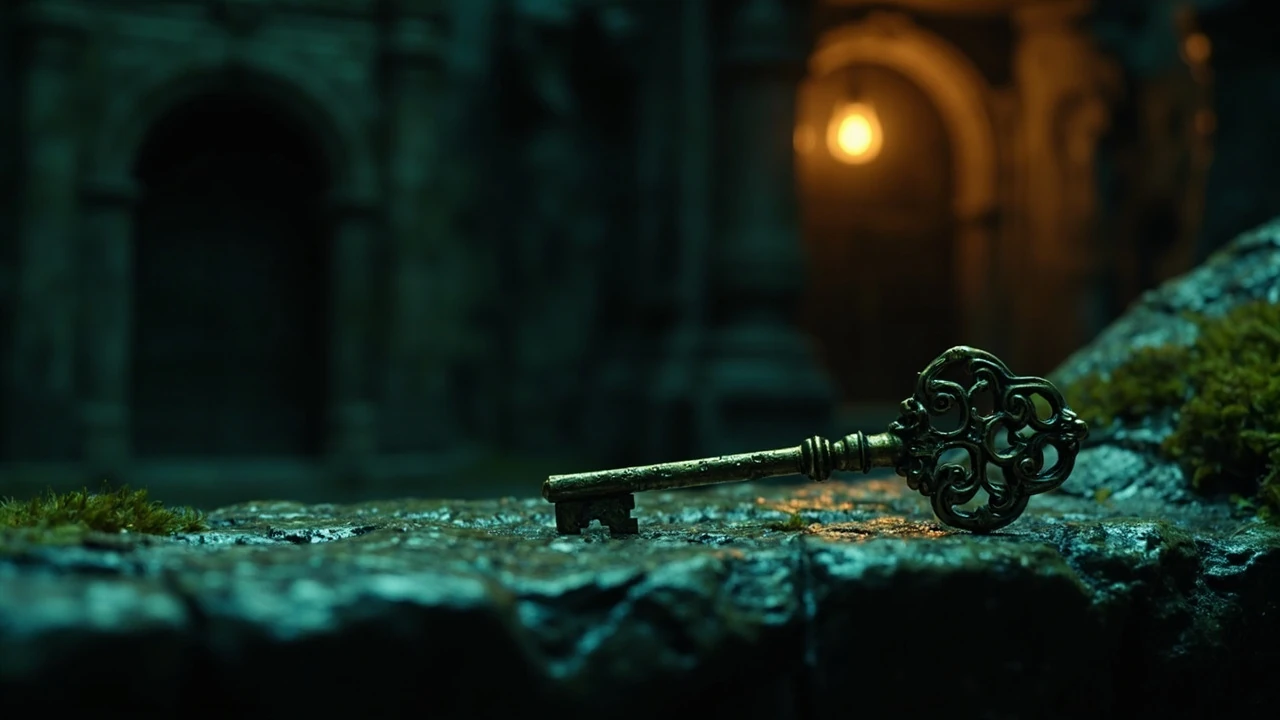
Silksong simple key: what it is and why it matters
A simple key in a metroidvania is a small, single-use item that turns an otherwise sealed passage into a reachable room, and players searching for the silksong simple key usually want three things: where to pick it up, what door it actually opens, and whether they should hold onto it for later. Because Hollow Knight: Silksong is built around a tight economy of small pickups that gate optional content, knowing how a single key behaves in the world matters more than memorizing one quest marker. This article treats the simple key as both a player-facing item and a design object, because the same logic that makes it interesting to find also makes it interesting to implement and balance in a handcrafted map.
The simple key belongs to a long tradition of consumable key items in two-dimensional exploration games. The original Hollow Knight used a similar pattern for opening specific locked doors that contained Geo caches, charm upgrades, and lore rooms, and the same approach has been expanded in Silksong with a larger world and a slightly different tool kit. Players who treat the simple key as a minor pickup are often surprised to find that the room behind the matching lock can contain enough resources to alter their route through an entire region, which is why the decision of when to spend the key is a small but real strategic choice rather than an automatic click.
For developers, the simple key is also a useful case study. It demonstrates how a low-cost item can carry significant progression weight without breaking the wider economy, and it shows how designers layer optionality on top of a linear critical path. The rest of this guide breaks the item down into its player-facing behavior, its likely design intent, and the production patterns that produce this kind of gated content in a handcrafted world map. We will look at where keys tend to sit, what is usually behind the matching door, how to balance the number of keys against the number of locks, and how a small team can implement the pattern cleanly in Unity or Godot without creating save-state bugs that erode player trust.
How a simple key fits into Silksong’s progression model
Silksong is structured as a region-by-region metroidvania with vertical maps, fast-travel stations, and a steady drip of new traversal abilities. Within that structure, a simple key acts as a micro-gate: a single object that blocks one specific room, not an entire area. This kind of gate is intentionally cheap to bypass, but only when the player happens to be near the right door. The result is that exploration decisions become local rather than global, which keeps the pacing tight and avoids the long dead stretches that plague less careful metroidvanias.
From a design standpoint, the simple key pattern solves several problems at once. It rewards players who backtrack through familiar terrain, it gives a reason to enter side rooms that would otherwise feel decorative, and it lets designers plant small story beats or rare items without committing a full ability upgrade to the gate. In practice, the key behaves like a currency with a denomination of one, and the matching door is the only place that denomination is accepted. The player cannot trade a simple key for a charm, cannot convert it into healing at a bench, and cannot use it to bribe a vendor. Its only function is to open one lock, and that narrow role is exactly what makes it interesting to place.
This micro-gate approach also reduces the risk of soft-locks. Because each key opens exactly one door, a player who uses a key early cannot accidentally lock themselves out of a future region. The worst outcome is that they spend the key in the wrong room, and even that is recoverable, because most metroidvanias include at least one redundant source of simple keys scattered across a region. Silksong appears to follow that convention, with at least one spare key sitting in a side room so that a player who wasted an earlier one still has a way to open a later door without consulting a guide. The spare key is a quiet kindness that few players notice and many benefit from.
Likely locations where a simple key appears
Although the exact coordinates can shift with patches, the design pattern of a simple key in Silksong tends to follow a small set of conventions. Understanding these conventions helps a player predict where to look, and helps a developer reason about where to place similar items in their own project without falling into the trap of hiding every key in a remote corner that nobody visits.
- Hidden alcoves off the main path: short side rooms that branch from a larger chamber, often behind a breakable wall or a small platforming detour that punishes careless players only mildly.
- Reward rooms after a sub-boss or challenging enemy cluster: the simple key sits on a corpse, a bench, or a pedestal that requires defeating local threats before the pickup becomes reachable.
- Vendors or NPC exchanges: a small subset of simple keys are obtained by trading a low-value currency, a trinket, or completing a short side request that has its own small payoff.
- Cartographer and bench rooms: a few keys appear in the rooms adjacent to fast-travel points, which doubles their value by reducing travel time to the matching door.
Players who scan for these patterns tend to find most simple keys without consulting a full map. The visual language is consistent: the key item usually appears as a small, bright pickup distinct from the ambient palette, and the matching door has a noticeably different frame, often with a faint glint or a unique lock plate. Paying attention to that visual contrast is usually faster than brute-forcing every room, and it is also a good habit for any 2D exploration game, because locked doors almost always signal their presence through small but readable visual differences. Sound design helps as well. A faint metallic chime usually plays when a key item enters the active room’s audio radius, and many players learn to follow that sound before they ever see the pickup on screen.
What a simple key actually unlocks
Doors that consume a simple key in Silksong are tuned to be worth opening, but not critical. A common room layout behind a simple key looks like the following, and the variety inside that range is part of what keeps the gate interesting across a long playthrough.
| Room type | Typical contents | Strategic value |
|---|---|---|
| Geo or shard cache | A small pile of currency or a single rare shard | Short-term economy boost that helps fund a bench upgrade or a tool slot |
| Charm or tool fragment | A component for a craftable tool, or a charm slot upgrade | Long-term build flexibility that compounds over the rest of the run |
| Lore or NPC room | A short text entry, a tablet, or a quiet NPC with optional dialogue | Narrative payoff with no direct combat benefit |
| Shortcut connector | A breakable floor that links two distant rooms once the key is spent | Quality-of-life routing win that reduces backtrack time |
| Map or quill station | A small mapping upgrade that reveals nearby corridors | Mild metagame benefit for completionist players |
Notice how the value scales with the player’s current build. Early in a run, a Geo cache is meaningful because the player is still upgrading their needle and tool kit, and every shard matters. Later, the same cache is irrelevant, but a shortcut connector becomes a routing win because it cuts travel time between two benches that the player will visit many times. The simple key is therefore a multi-purpose tool whose usefulness depends on when and where the player chooses to spend it, and a careful player will often choose to leave an early Geo cache locked and return for it later when the room behind the door holds something more valuable to their current build.
When to spend a simple key and when to hoard it
Holding onto a simple key has a real cost. Every key in the inventory is one fewer pickup slot for healing items, tools, or quest objects, and the simple key is rarely a quest requirement. Most players will benefit from spending a simple key as soon as they find a matching door, but there are a few situations where holding the key briefly is worth considering before the player commits to the lock.
- The key is found very early in a region, and the player has not yet mapped the full area. Waiting a few rooms can reveal a better door with a more useful reward, and a quick scan of the map often shows where the locked doors sit.
- The local region has multiple simple-key doors, and the player is on a long downward route. Spending the key at the top door may force the player to backtrack past a second locked door without the means to open it, which wastes a fast-travel slot.
- The matching door is in a region the player has already largely cleared. In that case the key is better saved for the next region, where the door is more likely to gate new content rather than a small pile of Geo that no longer matters.
- The player is low on healing and is heading into a difficult section. Spending the key on a lore room instead of a cache is rarely worth the risk, and a small detour for shards can be the difference between a clean run and a bench reset.
For most players, the simple rule is: if the matching door is on the way forward and the room behind it is unexplored, spend the key now. If the door is behind the player, leave the key and check a map or a community resource before committing. The same rule applies to almost every small consumable in the genre, and it is the kind of decision that experienced players make in a fraction of a second without ever thinking about it explicitly.
Player checklist for hunting simple keys
Before spending time on a full search, players can run through a short checklist that catches the majority of simple keys without slowing down normal exploration. The list works because the simple key is placed using consistent signals, so a player who recognizes the signals sees the key before they reach it and can plan the rest of the route accordingly.
- Scan the upper third of every new room for a small bright pickup on a ledge or behind a platforming hook, because vertical placement is the most common hiding spot.
- Listen for a faint metallic chime that often plays when a key item enters the active room’s audio radius, and follow the sound rather than the eyes when possible.
- Break suspicious walls along the perimeter of larger chambers, especially walls that are slightly darker than the surrounding rock and that sit near a transition between two biomes.
- After clearing a sub-boss, return to the room and check any unopened side passages, because some keys are gated by a defeated enemy rather than a physical lock.
- Check the inventory after every new region to see whether a held key can be matched to a door on the way back to the last bench, and spend it on the way rather than on the next detour.
- Mark locked doors on the map the first time the player walks past them, because the matching key is often in a room the player has not yet visited.
None of these steps are exploits. They are simply the patterns the game’s design language uses, and the same patterns appear in the original Hollow Knight’s economy of small keys and in similar items across the genre. A player who internalizes the checklist will find more keys, miss fewer doors, and spend less time running in circles through rooms they have already cleared.
Design lessons from the simple key pattern
For developers, the simple key is a small but instructive example of how a low-cost item can carry meaningful weight in a handcrafted world. Several design lessons stand out from how Silksong appears to use the item, based on its predecessor’s design and the broader conventions the genre has standardized over the last decade. None of these lessons are new, but seeing them in a single item helps a small team reason about their own progression systems.
| Design goal | How the simple key serves it | Risk if the pattern is overused |
|---|---|---|
| Reward backtracking | A held key is a reason to revisit a familiar region with a new door in mind | Backtracking can feel grindy if every door is gated the same way and the rooms behind the doors repeat the same archetype |
| Diversify room content | Each door is a chance to seed a different room archetype behind it | Rooms can feel interchangeable if every door holds the same small cache and the player stops caring about the contents |
| Preserve critical path | Keys gate optional content, not required progression | Players may miss a key entirely and feel locked out of a side path they were curious about |
| Support low-skill play | A key spent on a shortcut helps players who struggle with combat by reducing travel time | Shortcuts can shorten a region so much that the intended pacing collapses and the player skips half the encounters |
| Encourage map reading | Lock icons force the player to notice map details that would otherwise fade into the background | Map clutter can overwhelm new players who are not used to tracking multiple icons at once |
Notice how the same property that makes the simple key useful also defines the failure mode. The item rewards exploration, but if every door requires one, exploration becomes a chore and the player starts to resent the locks rather than appreciate them. The item diversifies room content, but if every room contains a small cache of the same kind, none of them feel special and the player stops opening doors out of curiosity. Good usage of the simple key pattern is therefore a balancing act between variety and restraint, and the best way to find that balance is to playtest the early region with new players and watch how they react to the first locked door they encounter.
Production patterns for implementing a simple key
From a production standpoint, a simple key is one of the cheapest items to implement in a Unity or Godot project, but it still benefits from a small amount of structure. A clean implementation separates three concerns: the pickup object, the matching door, and the persistent flag that records the state of the door across save files. Mixing these three concerns into a single script makes the system harder to extend later, and it also makes it harder to track down the kind of save-state bug where a key is consumed but the door re-locks after a session restart.
For teams using Unity, a typical layout involves a pickup prefab that exposes a unique identifier, a door prefab that subscribes to a state change when the identifier is delivered to the inventory, and a save layer that writes the door’s open or closed state to disk. The same identifier is also useful for analytics, because the team can measure how often players pick up the key, how often they spend it, and how many players reach a room that depends on the key without holding it. That last metric is especially useful during balancing, because it shows whether the placement ratio of keys to doors is fair or whether some players are running out of keys before they reach the doors that matter most.
- Treat the simple key as data, not behavior. The pickup is a small script that sets a flag, and the door is a small script that reads the flag. Putting any of the door’s logic inside the pickup script is a common mistake that breaks quickly when the team adds a second key type.
- Tag every key-bearing room in the level editor so that QA can find them with a search filter rather than by memory, and so that designers can run a quick density check across the whole map.
- Test the door state across save and reload on every platform the game ships on, because a key that is consumed but does not persist is one of the most common progression bugs in the genre.
- Reserve a small number of simple keys for post-launch content so that future patches can add new doors without revisiting the existing economy or breaking existing saves.
- Version the flag in the save file. A simple key added in a later patch should not reset the open state of doors the player has already opened in an earlier version of the game.
This kind of separation also makes it easier to localize or rewrite the item’s description, because the pickup prefab only references a string key rather than embedding a literal sentence. That matters for studios shipping in multiple languages, where the cost of a hard-coded string compounds across every key in the game and across every tool tip that mentions the key. A clean data layer turns a one-line text change into a one-line text change, instead of forcing the team to hunt through a dozen scene files for embedded copy.
Balancing the simple key economy
Balancing a small key economy is mostly a question of inventory pressure. If the player can hold ten simple keys at once, the gates stop feeling meaningful because the player can open every door they find and the decision of when to spend disappears. If the player can hold one, the gates feel punitive because a single misclicked door can lock the player out of a long stretch of optional content. The For additional context, original Hollow Knight solved this by giving the player a generous key pouch and a small number of locks, so the player almost never felt inventory pressure even when the world contained several keys scattered across a region.
Silksong appears to extend the same logic, with a slightly larger world and a few more keys per region, and the IGN coverage of differences and new features points to a more generous pouch than the original game shipped with. The balancing pattern that tends to work is to plant one simple key per two to four doors, and to make sure that at least one of those doors is reachable from a safe spawn point so the player is never more than a short walk from using the key they just found. Designers who follow this rough ratio rarely see the simple key become a sore point in playtest data, because the player’s frustration with a held key is usually a function of distance, not scarcity. A key the player can spend within a minute of finding it feels like a small reward. A key the player has to carry for an hour feels like an errand.
A useful diagnostic during balancing is to track the average time between pickup and consumption. A pickup-to-consume window of more than a few rooms usually means the player is hesitating, which is a signal that the room behind the matching door is not clearly worth opening or that the player does not trust the door to be worth the cost. A pickup-to-consume window of less than a minute usually means the key is too easy to spend, which can be a signal that the gates are not adding enough pacing value and the designer is essentially placing free pickups behind decorative doors. The middle of that range, where the player picks up a key, sees a door, walks over, and spends the key, is where the simple key pattern feels most natural and most rewarding.
Common mistakes when placing a simple key
Even experienced teams make small mistakes with key items, and the simple key is no exception. Most of these mistakes come from treating the key as a reward rather than a routing tool, which leads to placements that feel generous in isolation but frustrating in the context of a long playthrough. Catching them in internal builds is far cheaper than patching them after release, because every misplaced key is a small promise the game breaks to the player.
- Hiding the key so well that the door it opens is never found. The item is wasted, and the player feels the game cheated them by advertising a reward it never delivered.
- Placing the key and the matching door in the same room. The gate has no strategic meaning because there is no decision to make and no detour to plan.
- Using the same room archetype behind every key door. The repetition drains the player’s interest in finding the next key and turns the lock into a chore rather than a curiosity.
- Forgetting to update the door’s art when the lock is removed. The player is told the key worked, but the visual still shows a closed door, which breaks immersion and undermines the small payoff of the spend.
- Putting a healing reward behind a key in a region where the player is already healthy. The reward is wasted, and the key would have been better spent on a charm fragment elsewhere.
- Locking the only fast-travel shortcut in a region behind a key without placing a key nearby. The player is forced to backtrack through hostile territory just to test whether the shortcut is worth the cost.
None of these mistakes are fatal on their own, but they compound. A game with five keys and five of these problems feels sloppy, while a game with five keys and no such problems feels confident. Designers who review key placement against a checklist during internal builds tend to catch the issues before they reach wider playtest, and the same checklist can be reused for chest rooms, ability gates, and any other consumable-to-lock pairing the team decides to ship. The list is short, but applying it consistently is the difference between a map that feels curated and a map that feels assembled.
How the simple key compares to other progression items
Silksong includes a number of progression items beyond the simple key, and understanding the differences helps a player prioritize and helps a designer avoid overlapping roles. The table below summarizes the most common categories and how the simple key relates to each of them, with a focus on the practical difference in how the player interacts with the item rather than a generic taxonomy.
| Item type | Reusable | Typical gate | Comparison to the simple key |
|---|---|---|---|
| Simple key | No, single use | One specific door, optional content | Cheapest and most local gate in the game, with the smallest decision cost |
| Traversal ability | Yes, permanent | Many doors and ledges, often critical path | Replaces several simple keys at once once acquired, and reshapes the entire route through a region |
| Boss reward | Yes, permanent | A new region or major story beat | Heaviest gate, but the player has clear feedback on when to attempt it and what they will gain |
| Crafting component | Yes, consumed on craft | Specific tool or charm recipes | Decision sits in the build menu rather than at the door, and the cost is paid in materials rather than exploration |
| Bench upgrade token | Yes, usually permanent | A new fast-travel point or a respawn improvement | Indirect gate, because it does not open a door but it changes how the player reaches one |
The simple key sits at the small end of this scale, which is exactly why it is interesting. It is small enough that a single misplaced key can erode trust in the game’s design, but it is also the most common kind of gate, so getting it right has an outsized effect on the player’s overall experience. A player who finds every simple key, opens every door at the right time, and never feels cheated by the game’s economy will keep playing long after the critical path is finished, and that retention is the real return on the small amount of design care the item requires.
Accessibility considerations for key-based progression
Key-based progression has a reputation for being unfriendly to players who struggle with backtracking or with hidden pickups, and Silksong’s design language addresses this in two ways. First, the matching door is usually visible from the corridor that contains the key, so the player can see what they are working toward without having to memorize a separate map marker. Second, the simple key is a small object, so its audio cue and its silhouette are designed to read clearly even on a small screen or with reduced visual contrast settings, which is a quiet but important concession to players who play on handheld hardware or who need a higher-contrast palette.
For developers shipping similar items, the accessibility check is straightforward. Can a player with low vision spot the key from across the room? Can a player with motor limitations reach the key without a high-skill platforming sequence? Can a player who uses a controller with remapped buttons interact with the door without an awkward prompt? If the answer to any of those questions is no, the key should be repositioned, the matching door should be made more obvious, or the input prompt should be simplified. A simple key that is invisible to half the audience is a simple key that does not exist for them, and that is the most expensive kind of bug because it does not show up in crash reports, only in the quiet drop-off of players who quietly stop playing.
Another accessibility lever is the option to spend a small amount of in-game currency to bypass a locked door, which several modern metroidvanias now include for players who are stuck or who simply want to keep moving. The bypass is not a replacement for the simple key, and most players will never use it, but its presence in the options menu is a small signal that the team thought about players who are not able to backtrack for an hour. Silksong has not confirmed such an option as of this writing, but the design space is open and the precedent in similar games is encouraging.
Building a habit around small consumables
Players who get the most out of a simple key economy are the ones who treat small consumables as a habit rather than as a decision. The habit looks something like this: pick up the key when it appears, glance at the map for the nearest matching door, walk to the door if it is on the route, spend the key, and move on. The whole loop takes a few seconds once the player has done it a dozen times, and it removes the mental load of carrying the key without using it. Players who try to optimize the spend on a case-by-case basis often end up carrying keys longer than they intended and missing the small benefits the keys were placed to provide.
This habit also scales to other consumables in the genre. Healing salves, throwable tools, and crafting components all benefit from a similar pick-up-and-use rhythm, because the alternative is an inventory full of small decisions that fragment the player’s attention and slow down the parts of the game that are actually fun. The simple key is a good place to start building the habit, because its cost is small and its feedback is immediate, and the same pattern transfers naturally to almost every other consumable in a metroidvania inventory.
What players and developers take away from the simple key
For players, the takeaway is short: a simple key is a small promise that the game will give you something worth opening the next time you find a door, and the only way to keep that promise meaningful is to spend the key at the first matching door on the forward route. The simple key is not a resource to stockpile, and it is not a quest item to save for a quest marker. It is a small local gate, and the best way to enjoy it is to treat it as one.
For developers, the takeaway is also short, and it is the same lesson in a different vocabulary: a simple key is a routing tool, not a reward. Place it where it gives the player a reason to detour, and put a variety of rooms behind the doors so that the player’s curiosity stays alive across a long playthrough. Tag the rooms for QA, version the save flags, test the door state across reloads, and resist the urge to hide the key so well that nobody finds it. Do those things, and the simple key will quietly do the work of a much larger progression system without ever asking the player to think about it for more than a second.
Frequently asked questions
What does the silksong simple key actually do?
The silksong simple key is a single-use consumable item that opens one specific locked door. The door usually contains a small reward such as a Geo cache, a charm or tool fragment, a lore room, or a shortcut that links two otherwise distant parts of the map. Once spent, the key is removed from the inventory and the door stays open for the rest of the playthrough.
Where is the earliest silksong simple key?
The earliest simple key tends to appear in the opening region as a small pickup in a side room, often behind a breakable wall or on a short platforming detour. Exact coordinates can shift with patches, so players who want the most reliable route should treat the pickup as a pattern to recognize rather than a single coordinate to memorize, and they should check the surrounding doors for a matching lock before assuming the key is for a room in a later region.
Can I miss a silksong simple key forever?
No. The simple key system in Silksong is designed so that a missed pickup can usually be reached by backtracking from a later bench. Because each key opens a single door, the worst case is that the player enters a region without the matching key, makes a note of the locked door, and returns later. The game does not soft-lock the player out of optional content, and the door will wait for as long as the playthrough continues.
Should I save the silksong simple key for later?
For most players, spending the key at the first matching door is the right call, because the door is usually on the way forward and the room behind it is unexplored. The main exception is when the player is in the middle of a long downward route with multiple locked doors, where spending the key at the top door may force a backtrack past a second lock that the player cannot open without a second key.
How is the silksong simple key different from a traversal ability?
A traversal ability is permanent and reusable, and it opens many doors at once across the world. The simple key is single-use and local, and it only opens one specific door. Abilities reshape the entire map, while a simple key changes one room. Both have value, but they sit at different scales of progression, and the simple key is the one the player is more likely to use without thinking.
Does the silksong simple key respawn after a death or a bench rest?
No. Once the key is picked up, it stays in the inventory until spent, and once the matching door is opened, the door stays open across bench rests and deaths. The only way to lose a key is to spend it, which is why the timing of the spend is the real strategic question and why most players will spend the key on the first matching door they find on the forward route.
Is the silksong simple key worth farming?
Only in narrow cases. If the player is searching for a specific room archetype such as a charm fragment, it can be worth farming one or two extra keys to cover multiple candidate doors in the same region. Otherwise the time is better spent exploring the rest of the map, because the natural pickup rate of simple keys is usually close to the natural lock rate, and a player who needs more than the natural rate is usually missing a room they walked past.
How does the silksong simple key compare to the original Hollow Knight’s keys?
Both games use small single-use keys to gate optional content, and the design intent is essentially the same. Silksong appears to extend the pattern with a slightly larger world and a small number of additional key types, but the basic loop of finding a key, finding a door, and deciding when to spend it is preserved. The experience is familiar to anyone who played the original, with a few new wrinkles around crafting and tool fragments that change which rooms are worth opening but not the underlying decision.
Do I need the silksong simple key to finish the main story?
No. The main story is gated by traversal abilities and major boss rewards, not by simple keys. Simple keys exist to enrich the world and to reward exploration, not to block the critical path. Players who are focused on the main story can safely skip the locked doors without losing the ability to finish the game, and the credits will roll on time even if half the keys are still in the inventory.
What is the best strategy for collecting every silksong simple key?
The best strategy is to combine routine exploration with a short review at the end of each region. As the player moves forward, they pick up the keys they can see, and at the end of the region they check the map for any locked doors they passed without the key. Returning from a later bench is almost always possible, so the player can collect the missed key on a short backtrack before moving on to the next region, and the total extra time is usually less than an hour across a full playthrough.

Leave a Reply